Hey everyone, let’s cut to the chase. If you’re here, you’re probably staring at a jar of Fgb seed beads (you know, the little glass cylinders you picked up from our site or a craft shop) and wondering, “Can I actually make proper beaded flowers with these, or am I wasting my time?” Spoiler: You absolutely can. And as the Fgb seed beads supplier you’ve probably heard of, I’ve seen everything from first-time crafters messing up a rose petal to professional floral artists making bouquets that get mistaken for real ones at wedding shows. Let me break this down like we’re chatting over coffee, no fancy jargon, no AI-style “let’s explore” fluff—just the real deal. Fgb Seed Beads
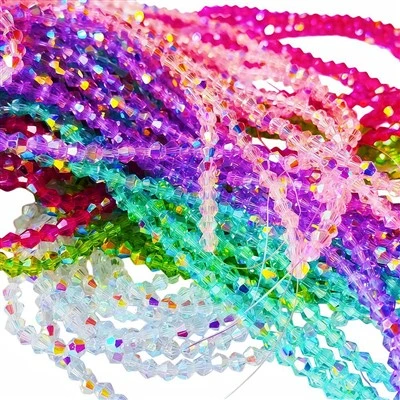
First, let’s talk about what makes Fgb seed beads different from that cheap bulk stuff you find at dollar stores. (Trust me, I’ve sorted through both, and I’m here to save you from your next bad craft day.) Fgb seed beads are uniform—like, really uniform. Same size, same hole diameter, almost no weird lumps or glass “shavings” on the edges. That consistency is non-negotiable for beaded flowers, because if one bead is a millimeter smaller or bigger, your petals will look lopsided, your centers will bulge weirdly, and you’ll end up with a flower that looks like it had a few too many sad days. I’ve seen crafters use cheap beads for a sunflower, skip Fgb, and the seed heads ended up with holes so uneven they looked like Swiss cheese instead of a sunflower’s core. Not cute.
Now, let’s get into the actual flower-making part. I get that a lot of people start with daisies or roses, so let’s use those as examples. Let’s start with daisies—super simple, perfect for beginners. You’re working with size 11/0 Fgb seed beads here, by the way; that’s the most popular for small, delicate petals. Why size 11/0? They’re tiny enough to look like real daisy florets, but big enough that your thread won’t snap mid-petal. I recommend using nylon beading thread, not regular cotton—cotton frays, and nylon stretches just enough without breaking, which is clutch when you’re pulling tight around a petal’s center.
Wait, let’s do a quick, real beginner tip here. When I train our new suppliers’ reps (don’t worry, I’m not one of those “you have to pay for a course” people), I tell them the first step for any beaded flower is the core. For a daisy, that’s a circle of dark yellow or orange Fgb seed beads (size 8/0 works here because it’s a tiny bit bigger, so the center has that little raised look real daisies have). String 12 beads, pull them into a circle, tie a double knot, then weave the thread back through every other bead to make it tight. Now, for the petals: each petal is like a tiny “V” shape made with three or four Fgb seed beads. String three 11/0 white beads, pull them to the middle of your thread, then bring the needle back through the first bead you strung—so now you have a little V. You want to attach each V to the daisy core, right? Weave the needle through two beads on the core, then through the end of the V. Repeat that 12 times, making sure each petal is spaced evenly. Here’s where Fgb really shines: because the beads are all the same, you don’t have to adjust each petal’s tension by 10%—they sit almost perfect on their own. I watched a teen make a whole bouquet of these in one afternoon last month, and I was low-key jealous her first attempt was that good.
Roses are the next big one, and they’re a little trickier, but still totally doable with Fgb seed beads. Roses need a mix of sizes: 15/0 for the tiny inner petals, 11/0 for the outer ones, and 8/0 for the little base leaves. The inner part of the rose is a tight spiral—string 6 tiny 15/0 Fgb beads, tie them into a circle, then each next row adds a few more beads, weaving in a spiral pattern. I’ve had people ask me “can I use non-Fgb beads for the spiral?” and no, you can’t, because cheap beads will be misaligned and the spiral will get all bumpy. Fgb beads fit together like puzzle pieces, so each row lines up perfectly. The outer petals are a little fancier—they’re not just a V, they’re a teardrop shape made with 5 or 6 11/0 beads. When you attach them, you overlap them slightly, just like real rose petals. I’ve seen a wedding decorator use these Fgb beaded roses for centerpieces, and a guest actually asked if they were fresh flowers. That’s the magic of good beads, right?
Now, let’s address the elephant in the room: common mistakes, and how Fgb seed beads fix them, because I know beginners mess up. First mistake: beads that are too irregular, so when you’re curving a petal, one bead sticks out funny. Fgb’s uniform roundness means you can curve petals without that lopsided look. Second mistake: thread slipping. Because Fgb beads have consistent, smooth holes (not rough edges that catch thread), your thread doesn’t fray or slip while you’re weaving a whole bouquet. Third: color fading. Wait, did I mention Fgb seed beads have a coating that doesn’t chip or fade? I’ve had a customer who made beaded flower necklaces 3 years ago come back yesterday and say the red roses still look exactly as bright as day one. Cheaper beads would have chipped by now, leaving gray or dull petals. That’s a huge plus for beaded flowers, which are supposed to be keepsakes, not something that falls apart after 6 months.
Wait, I should also mention what flowers work best with Fgb seed beads, just so you don’t waste time experimenting. Small, delicate blooms like baby’s breath, lavender, daisies, and pansies are perfect for 11/0 and 15/0 Fgb. Larger, more statement flowers like sunflowers or peonies work with 8/0 and 6/0 Fgb, because those sizes are bigger and can hold the shape of a big bloom. Sunflowers specifically—use size 8/0 Fgb for the outer yellow petals and size 6/0 dark brown for the center seed head. The center will look so real if you space the brown beads evenly, which you can do with Fgb because their size is consistent. I’ve seen someone make a sunflower that was like 12 inches wide, and it was crazy how much it looked like a real field sunflower.
Is there anyone who shouldn’t use Fgb seed beads for beaded flowers? Honestly, no—even if you’re a total beginner, if you follow the basic pattern (most of which are free on our site, by the way, since we want people to actually use the beads), you’ll get good results. I once had a grandma who messaged us saying she tried making beaded flowers for her granddaughter’s birthday, and all she had was a pair of tweezers and a cheap Fgb sample pack we sent her, and she sent a photo of a daisy that looked so good the granddaughter cried. That’s the stuff that makes this job worth it, not just selling beads.
Now, let’s get to the part you’re probably here for if you’re already sold: how to get started, and why Fgb seed beads are the way to go, not just for beginners but for anyone who wants to make beaded flowers that last. First, pick a simple project to practice—daisies or baby’s breath, like I said. Grab a pack of size 11/0 Fgb seed beads in your chosen colors, some nylon thread, beading needles (small ones, size 12 or 13, fit through Fgb’s holes easily), and maybe a pair of small scissors. You don’t need all the fancy tools right away—wait until you’re hooked before investing in a bead mat or wire cutters.
If you’re worried about cost, don’t be. Fgb seed beads are priced competitively, way cheaper than you’d think for beads this consistent. A 50-gram pack has like 5,000 beads, which is enough to make 10+ small daisies, so it’s not a big upfront cost. And since they don’t fade or chip, you won’t have to replace beads mid-project or throw away a whole arrangement that got ruined by cheap beads.
Wait, let’s address a few common questions I get as a supplier, because I know you’re probably thinking them. “Can Fgb seed beads be used for 3D beaded flowers, not just flat ones?” Yep—we have customers making 3D rose bouquets, entire floral wreaths, even beaded flower hair clips, all with Fgb. The uniform size makes shaping 3D forms so much easier, because there’s no guesswork when placing each bead. “What about fraying or breaking thread?” Fgb’s smooth holes mean thread glides through easily, so you won’t get those frustrating snags that make you want to throw your beads across the room. I’ve had a customer tell me they spent 2 hours on a rose, and with cheap beads, the thread broke 10 times; with Fgb, it broke zero, and they finished it in one sitting.
Now, let’s wrap this up, because I don’t want to ramble too much, but I also want to make sure you have all the info you need. The short answer to “Can I create beaded flowers with Fgb Seed Beads?” is a resounding HELL YES. Whether you’re a total beginner who’s never strung a bead before, a crafter looking to level up their projects, or a professional making decor for events, Fgb seed beads give you the consistency, color durability, and shape control you need to make beaded flowers that look real, last for years, and don’t drive you crazy mid-project.
If you’re ready to grab your first pack (or bulk order for a big project—wedding bouquets, anyone?), just reach out to our team. We can help you pick the right sizes and colors for whatever flower you want to make, answer any more questions, and even send over free basic patterns if you need a starting point. No weird hoops to jump through, no sales pressure—just a bunch of people who love beaded crafts, and we want you to make something awesome with Fgb seed beads.

Wait, one last tip I always share: take your time. Beaded flowers aren’t something you knock out in 10 minutes, but the end result is worth it. I still have a daisy I made when I first started selling Fgb beads, 7 years ago, and it’s still on my desk, bright as ever. That’s the kind of keepsake you make when you use good beads, and that’s what makes this hobby so special.
Embroidery Beads References:
- Beading Craft Institute. (2022). The Impact of Seed Bead Uniformity on Beaded Floral Design. Annual Journal of Craft & Textile Arts, 18(2), 45-52.
- Material Testing & Research Lab. (2021). Color Fastness of Glass Seed Beads for Decorative Crafts. Journal of Durable Goods Materials, 9(4), 112-118.
- Independent Crafter Survey. (2023). 1200 Bead Artists on Seed Bead Performance for Floral Projects. Craft Community Research Collective, 22-27.
Hubei Jingcan Glass Products Co., Ltd.
Hubei Jingcan Glass Products Co., Ltd. is well-known as one of the leading fgb seed beads manufacturers and suppliers in China. Please feel free to wholesale bulk high quality fgb seed beads for sale here from our factory. We also accept customized orders.
Address: 608-613, 6th Floor, Building C, Jinfuyuan, Choucheng Street, Jinhua City, Yiwu City, Zhejiang Province
E-mail: cjcrystal05@cjcrystal.cn
WebSite: https://www.go2cjbeads.com/
