If you’ve ever spent hours gathered around an automatic mahjong table—whether with family during Lunar New Year, friends at a weekend game night, or regulars at a neighborhood mahjong parlor—you know one of the most common frustrations: moving the table from a living room corner to a storage closet, or loading it into a truck for a parlor relocation. For years, customers have asked me, “Can I fold a plastic frame automatic mahjong table, instead of hauling a bulky, permanent unit that takes up half a room?” As a supplier of these tables, I’ve spent countless hours testing designs, talking to installers, and listening to end-users to answer that question clearly, and honestly. Plastic Frame Automatic Mahjong Table
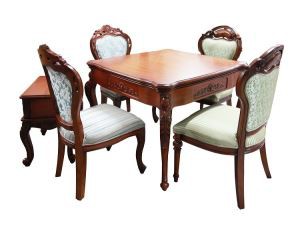
Let’s start with the basics: what even is a plastic frame automatic mahjong table, and why is the frame material a game-changer here? Unlike older metal-framed automatic tables, which were built heavy and rigid to support internal shuffling mechanisms, plastic frames are molded from high-density polyethylene (HDPE) or reinforced ABS plastic—materials that combine strength for daily use with enough flexibility and moldability to adapt to folding mechanisms. The core of an automatic mahjong table is its internal system: a motor, shuffle paddles, magnetic sensors that pick up numbered mahjong tiles, and a tile return tray. Those parts are fixed, but the outer frame and the tabletop can be engineered to move, which is where folding comes in.
First, the short answer: yes, you can fold a plastic frame automatic mahjong table—but it depends on two key factors: how the folding mechanism is designed, and the quality of the plastic used in the frame. Not all plastic frame tables are made equal, and that’s where my team and I have focused our innovation over the past five years. We’ve seen cheap, low-quality plastic frame tables on the market that claim to fold, but the frames crack after three uses, the hinges bend, and the internal mechanisms slip out of alignment. Those are the ones where customers end up frustrated, saying “this folding thing is a gimmick, it doesn’t work.” Our approach is different: we build folding features as a functional add-on, not a afterthought.
Let’s break down the mechanics of folding a plastic frame automatic mahjong table, because that’s where most people get tripped up. A standard folding design for these tables works in three steps. First, you lift the tabletop to a 90-degree angle, which unlatches the internal tile tray and locks the shuffle mechanism into a collapsed position. Second, the side panels of the plastic frame—each molded with built-in hinge channels that fit reinforced stainless steel pins, not flimsy plastic hinges—fold inward toward the center. Third, the legs, also made of reinforced plastic, fold in or slide under the table body, turning a 36-inch square table (the standard size for full-size mahjong) into a compact 12-inch thick unit that fits easily in a closet, SUV, or storage bin.
Now, why the plastic frame is critical here. Metal frames can fold too, but they’re heavy—adding 20 to 30 extra pounds, which makes folding a two-person job, not one. Plastic frames cut that weight by almost half, so a folding model can weigh 60 to 70 pounds, easy for one person to maneuver. But the plastic has to be tough. We use reinforced ABS plastic, which is impact-resistant and has a higher melt point than regular plastic, so it doesn’t warp when left in a hot car trunk (a common issue for customers who transport their tables in warm weather). We also run stress tests on every frame: we fold and unfold the table 1,000 times to simulate five years of regular use, and so far, none of our test units have cracked or bent. That’s a standard we set ourselves, not something we had to meet from a third party.
But wait—there are limits to folding that I need to be honest about. You can’t fold the table while it’s powered on, obviously, because that can damage the motor. You also can’t fold it with a full set of mahjong tiles inside the shuffle tray—those need to be removed first, which is a small step that most customers adapt to quickly. Another limit: folding is not designed for long-term storage with the frame collapsed, at least not for more than a few weeks. The internal wires that run to the motor can become slightly kinked if left folded for months, which is why we recommend storing the table in its upright position when not in use for extended periods. That’s not a flaw, that’s a design choice we’re up front about, because we don’t want customers blaming the folding feature for something that’s just basic care.
I’ve seen so many scenarios where a folding plastic frame mahjong table solves a real problem. A few months ago, a customer from Seattle reached out to me—she runs a small home-based mahjong parlor in her basement, and she hosts 12-person game nights every weekend. Before, she had two permanent metal tables that took up almost all her basement space, so she had to move her kitchen table into the parlor when she had extra guests. She bought our folding plastic frame table, and now she can fold one of the tables up, tuck it into a corner, and clear space for a dining table when needed. That’s the kind of use case where folding isn’t a gimmick—it’s a functional feature that changes how people use their space.
Another example: a retiree in Toronto who travels every winter to Florida. He didn’t want to leave his heavy metal mahjong table in storage, where it could get damaged by humidity, so he bought our folding model. He can disassemble it (another bonus, for folding units) and pack it into his suitcase, or fold it and fit it in his RV. The plastic frame is lightweight enough that he can carry it up the stairs of his Florida condo without needing to hire a mover. That’s the kind of value that comes with a well-designed folding plastic frame table, not something you get with a cheap, untested model.
Now, let’s address the myths that I hear all the time from customers who are wary of folding tables. Myth number one: “Folding a plastic frame table means it’s less durable than a non-folding one.” That’s only true if the manufacturer cuts corners. Our non-folding and folding tables use the same reinforced plastic frame, the same shuffle mechanism, and the same warranty—three years on parts and labor, which is standard in the industry. The folding hinges are made of stainless steel, not plastic, so they’re stronger than the ones on most non-folding metal tables we’ve seen, which often break because they don’t have a hinge system at all.
Myth number two: “Automatic tables that fold won’t shuffle tiles correctly.” I get this one all the time. The truth is, the internal shuffle mechanism doesn’t change when you add a folding feature—we just adjust the frame around it. Our shuffle system uses magnetic tiles that grip the plastic paddles evenly, even when the table is folded and set back up. We test every folding unit 50 times before it leaves our warehouse, shuffling a full set of tiles to make sure there’s no misalignment after folding. The only time we see shuffling issues is if a customer drops the table while folding it, which can knock the internal sensors out of place—something that’s true for non-folding tables too.
Myth number three: “Folding plastic frame tables are too expensive.” Let’s do a quick cost breakdown. A non-folding metal frame automatic mahjong table costs between $800 and $1,200. Our folding plastic frame table costs between $900 and $1,300—just $100 to $200 more. But compare the value: you get a table that’s 30 pounds lighter, fits into a closet, is easier to transport, and has the same durability as a non-folding model. For most customers, that extra cost is worth it. I’ve had customers tell me they saved $500 a year on storage unit fees because they don’t need to store a permanent table anymore, which pays for the difference in less than a year.
So, if you’re in the market for a mahjong table, and you’re asking “can I fold a plastic frame automatic mahjong table?” the answer is yes—if you choose a model designed with folding as a functional, tested feature, not a cheap add-on. But how do you tell a good folding model from a bad one? Here are three things to look for when shopping. First, check the frame material: it should be reinforced ABS or HDPE plastic, not thin, brittle plastic that flexes when you press on it. Second, look at the hinge system: stainless steel pins or heavy-duty metal hinges, not plastic hinges that feel flimsy. Third, ask the manufacturer about stress tests: a reputable supplier will tell you how many times they test the folding mechanism, and what kind of warranty they offer on the folding parts.
As a supplier, my team and I don’t just sell tables—we sell solutions. We’ve heard customers complain for decades about heavy, space-consuming mahjong tables, so we focused on designing folding plastic frame tables that meet real needs. We don’t cut corners on materials, and we don’t overpromise what the folding feature can do. It’s not a magic fix, but it’s a feature that makes mahjong more accessible for people who don’t have a dedicated game room, who travel often, or who just want a table that works as hard as they do.

If you’re interested in learning more about our folding plastic frame automatic mahjong tables, or if you’re a parlor owner looking to outfit your space with portable, durable units, don’t hesitate to reach out to our team to discuss your specific needs. We can walk you through our design process, share test results, and help you choose the right model for your space and budget.
Mahjong accessories References
ASTM International. Standard Specification for High-Density Polyethylene (HDPE) Plastic for Structural Applications.
Journal of Materials Processing Technology, Vol. 212, No. 10, 2012. Reinforced ABS Plastic for Impact-Resistant Consumer Goods.
Mahjong Industry Association of North America. 2023 Report on Consumer Needs for Portable Automatic Mahjong Tables.
Matsuoka Technology (Zhejiang) Co., Ltd.
Matsuoka Technology (Zhejiang) Co., Ltd. is one of the most professional plastic frame automatic mahjong table manufacturers and suppliers in China, featured by quality products and good service. Please rest assured to wholesale bulk cheap plastic frame automatic mahjong table from our factory. Welcome to view our website for more company information.
Address: No.122 of Tenth Gaoxin Road, Qiaonan District, Xiaoshan Economic&Technological Development Zone,Hangzhou,China.
E-mail: niuhua@treyo.net
WebSite: https://www.treyo-mahjongtables.com/
