Hey, let’s cut to the chase—if you’re running a fleet of heavy-duty trucks, buses, or any commercial vehicle with air brakes, you’ve probably heard of a manual slack adjuster. But here’s the thing: a lot of folks I’ve talked to (as a supplier of these parts, I get to chat with tons of fleet mechanics and maintenance managers) don’t realize that over-adjusting this tiny-but-critical part can turn a minor brake issue into a total nightmare. Today, I’m breaking down exactly what happens when you crank that manual slack adjuster too far, why it matters so much, and what you can do to avoid messing this up. Manual Slack Adjuster
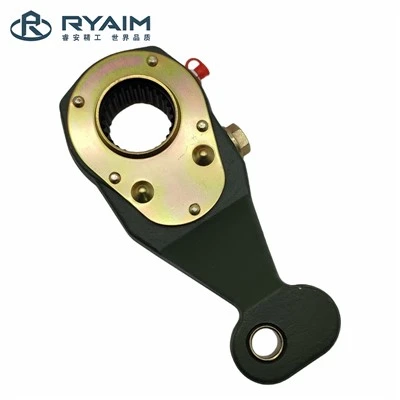
First, let’s recap what a manual slack adjuster even does, super quick. It’s the arm that connects your brake camshaft to the air brake’s push rod. When you hit the brakes, the push rod extends, the slack adjuster spins, and that moves the brake shoes out to press against the drum (or rotor, if you’ve got disc brakes, but slack adjusters are mostly for air drum setups). The “slack” part is the gap between the shoe and the drum—you need a tiny bit of slack so the shoes don’t rub when you’re cruising, but not so much that the push rod has to travel way too far to engage the brakes. That’s where manual adjustment comes in: you turn the adjuster to set that gap right.
Now, over-adjusting? That means you’re turning the adjuster too much, pulling the gap way too tight—like, almost no space between shoe and drum. At first, it might feel like you did a good job: brakes feel snappier, right? But that’s the calm before the storm. Let’s get into the effects, because they’re not just “slight wear”—they’re costly, dangerous, and can get you in major regulatory trouble.
First up: excess brake drag, and that’s a killer for fuel economy. I’ve had a client who over-adjusted all his slack adjusters on a fleet of 18 box trucks, and he came back three weeks later going, “Why is my fuel bill up 12%?” Duh. If your brake shoes are pressed against the drum 24/7, even when you’re not hitting the brakes, that’s extra friction. The engine has to work harder to move the truck—more fuel burned, more strain on the engine and transmission. Over a year, that adds up to thousands of dollars wasted. For a 10-truck fleet, that’s $10k+ in unnecessary fuel costs. And it’s not just fuel—those brakes are running hot all the time, too.
Next, overheating and brake fade. Brakes are supposed to get hot when you stop—that’s how they turn kinetic energy into heat. But if they’re dragging, they’re hot when they shouldn’t be. If you’re going downhill, that pre-heated brake is already halfway to failure before you even apply it hard. I remember a mechanic telling me about a delivery van that over-adjusted its slack adjuster, and on a mountain road, the front brake seized. The driver lost control, totaled the van, and luckily no one got hurt. Brake fade isn’t just a minor inconvenience—it’s a crash waiting to happen. FMCSA (Federal Motor Carrier Safety Administration) actually has rules about brake adjustment, and over-adjusting is a common violation that gets fleets pulled over. That leads to fines, vehicle out-of-service orders, which means no money coming in from deliveries or trips.
Then there’s the wear and tear on parts, which is where my role as a supplier comes in. If you over-adjust a slack adjuster, the push rod has a shorter travel distance. That means when you do hit the brakes, you’re not getting full engagement—wait, hold on, did I say drag? Wait, let’s clarify that: over-adjusting creates too much slack removed, so the shoes are always close, but when you brake, the push rod can’t move far enough to get the shoes pressed hard enough. Oh! That’s a double whammy. So you have both constant drag (wasting fuel, overheating) and reduced stopping power. That’s a huge safety risk. And those parts? The brake shoes, drums, camshafts, even the push rods and slack adjusters themselves wear out way faster. The constant friction from dragging makes the shoes thin out in months instead of years, and the drums can warp from uneven heat. I sell a lot of replacement slack adjusters, but I’d rather my clients didn’t have to because they over-adjusted theirs. I always tell them: “Set the slack, not the tight—too much tight is bad news.”
Wait, another effect: premature failure of other brake components. Let’s think about the air chamber. The air chamber uses pressure to push the push rod. If the push rod’s travel is too short (because over-adjusted slack adjuster doesn’t let it move far), that means the air chamber isn’t working at its full potential. So you’re not just wasting air pressure, you’re putting extra stress on the diaphragm inside the air chamber. Over time, that diaphragm cracks, leaks, and you need to replace the air chamber, too. That’s another cost I see—fleet managers don’t connect the dots between a slack adjuster tweak and a $500 air chamber replacement, but they should. There’s also the risk of brake lock-up, especially on slippery roads. If one brake is dragging more than the others (because you over-adjusted that one), you get uneven stopping power. On ice or rain, that makes the truck skid way easier. That’s a huge safety red flag, and not just for your driver—other motorists.
Now, why do people over-adjust slack adjusters? It’s usually a quick fix. Mechanics might rush a job, crank the adjuster a few turns more than needed, because they think “tighter is better for stopping.” Or maybe they forget to check the push rod travel after adjusting—FMCSA says the push rod should travel 1 to 1.5 inches for most heavy-duty trucks, and if it’s less than that, you over-adjusted it. Another reason: when brake shoes wear down over time, the gap gets bigger, so you adjust to take up the slack, but if you overdo it to avoid adjusting again soon, that’s a mistake. A lot of folks want to do the adjustment once every 6 months instead of every 3, so they crank it too far, which causes all the problems I just listed.
So how do you fix it, or better yet, avoid over-adjusting? First, learn the push rod travel rule: 1 to 1.5 inches for 5- to 7-inch air chambers, 1.5 to 2 inches for 9-inch chambers. If it’s less than that, loosen the adjuster a turn or two. Use a brake adjustment gauge if you’re not sure—they’re cheap, easy to use, and take the guesswork out. Also, don’t rely on the “feel” of the brake pedal. A firm pedal might feel good, but if your push rod travel is too short, you’re in danger. Do visual checks regularly: after every oil change, or every 1,000 miles, peek under the truck, see if the brake shoes are rubbing against the drum when the brakes are released. If they are, that’s a sign of over-adjustment.
As someone who’s been supplying manual slack adjusters for years, I’ve seen firsthand the cost of over-adjusting. We’ve got mechanics come to us for replacement adjusters because they cranked the old one too far, stripped the gears or broke the arm. We’ve also had fleet managers come back to us after cutting their fuel costs by 10% just by fixing their over-adjusted brakes—they couldn’t believe how much a tiny tweak made such a big difference.
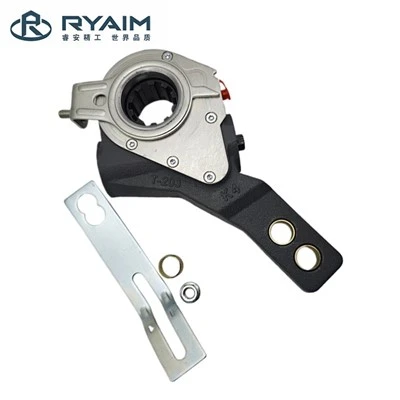
Look, brake safety isn’t something to cut corners on. Over-adjusting a manual slack adjuster might seem like a minor, harmless fix, but it leads to higher costs, more breakdowns, safety risks, and regulatory headaches. If you’re not sure how to adjust your slack adjusters correctly, or you need high-quality, durable manual slack adjusters that won’t strip or break when you do adjust them right, reach out to us. We’re here to answer your questions, whether you’re a small delivery fleet or a big trucking company, and help you get your brakes set up safely and efficiently.
China Truck Series Automatic Slack Adjuster Don’t wait for a brake failure or a fuel bill shock to fix this. Take 10 minutes to check your slack adjusters today, and if you need supplies or guidance, hit us up. We’re here to make sure your fleet runs smooth, not costly or dangerous.
References
- Federal Motor Carrier Safety Administration (FMCSA). Brake Adjustment Requirements for Commercial Motor Vehicles. Washington, D.C.: U.S. Department of Transportation, 2022.
- National Highway Traffic Safety Administration (NHTSA). Air Brake System Component Wear and Adjustment Impacts on Commercial Vehicle Safety. Washington, D.C.: U.S. Department of Transportation, 2021.
- Commercial Vehicle Maintenance Council (CVMC). Recommended Practice for Manual Slack Adjuster Adjustment and Inspection. Alexandria, VA: American Trucking Associations, 2020.
- “Fuel Economy Impacts of Brake Drag in Heavy-Duty Commercial Vehicles.” SAE International Journal of Commercial Vehicles, vol. 14, no. 2, 2021, pp. 456-462.
- Brake Industry Manufacturers Association (BIMA). Slack Adjuster Failure Modes and Preventive Maintenance Guidelines. Arlington Heights, IL: 2022.
Zhejiang Ryaim Auto Parts
As one of the most professional manual slack adjuster manufacturers and suppliers in China, we’re featured by quality products and good service. Please feel free to wholesale custom made manual slack adjuster from our factory. Contact us for more details.
Address: No. 78, Yexiao Road, Yaojiang Town, Zhuji City, Zhejiang Province
E-mail: bd@zjryaim.com
WebSite: https://www.ryaimchina.com/
