As a sponge mattress supplier, I’ve had countless conversations with customers who ask the same question: “How safe is my mattress when it comes to fire?” It’s a valid concern—mattresses are one of the most used pieces of furniture in your home, and understanding their fire resistance can mean the difference between peace of mind and worrying about what could go wrong. I’ve spent years testing and refining sponge mattresses, and today I want to break down what their fire resistance actually means, how it works, and what every buyer should know before making a purchase. Sponge Mattress
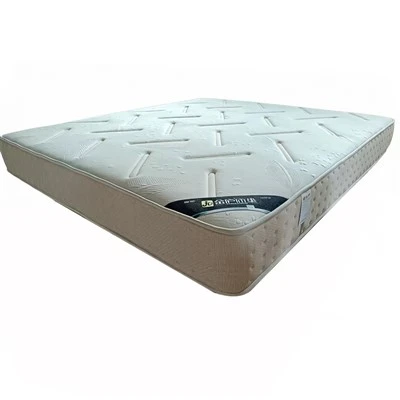
First, let’s start with the basics: sponge mattresses (also known as foam mattresses, though “sponge” is a common term for the porous polyurethane foam that makes up most of these mattresses) aren’t fireproof. No mattress on the market is—even the most advanced, high-end models can catch fire if exposed to a sustained, high-heat source like a lit cigarette left unattended, a space heater placed too close, or a candle that falls off a nightstand. That’s a critical myth to bust right away. Fire resistance, in the context of furniture like mattresses, refers to how well a material can slow or prevent the spread of fire, and how it behaves when exposed to small, accidental ignition sources that are common in homes.
When it comes to sponge mattresses specifically, there are two main components that impact their fire resistance: the foam itself, and the cover it’s wrapped in. Let’s dive into the foam first. Traditional polyurethane foam, the core of most sponge mattresses, is a hydrocarbon-based material, meaning it’s made from compounds that can burn. In its raw form, unmodified polyurethane foam will ignite at around 700 degrees Fahrenheit (about 370 degrees Celsius) and burn rapidly, releasing heat and smoke as it does. That’s not to say all sponge foam is the same, though. Over the past few decades, manufacturers (including myself, in my role as a supplier) have developed flame-retardant treatments that are applied to foam during production to slow its reaction to fire.
These treatments work in a few different ways. Some coat the foam’s porous cells to create a barrier that keeps oxygen from reaching the material—since fire needs oxygen to burn, cutting that supply stops the flames from spreading quickly. Others work by releasing non-flammable gases when the foam is heated, which dilute the flammable gases that the foam would otherwise release as it burns. For example, many modern sponge foams use halogen-free flame retardants, which are preferred over older chemical treatments because they release fewer toxic fumes when burned. It’s important to note, though, that flame-retardant treatments aren’t permanent. Over time, as a mattress is used, cleaned, and exposed to sunlight or moisture, these treatments can break down, slightly reducing the foam’s fire resistance. That’s why regular maintenance (like keeping the mattress clean and avoiding direct sunlight) can help preserve its performance over years of use.
The second key component is the mattress cover. Even if the foam has strong flame retardants, a poorly designed cover can easily catch fire and spread flames to the core. Most sponge mattress covers are made from a blend of materials—cotton, polyester, or a mix of both—that can also be treated with flame retardants. Some covers are woven tightly, making it harder for a small flame to penetrate through to the foam underneath. I’ve seen too many customers skip over the cover specs when shopping for a sponge mattress, but that’s a mistake. A cover that’s designed to resist small ignitions, like a lit cigarette, can prevent a tiny spark from turning into a full bedroom fire. To give you an example of how this works: in standardized safety tests, a common scenario is dropping a lit cigarette on a mattress cover. A treated, tightly woven cover will self-extinguish within a few seconds, without burning through to the foam, while an untreated cover will catch fire quickly and spread to the core foam.
Speaking of standardized tests, that’s a big part of understanding fire resistance. Governments around the world have set strict safety standards for mattresses to protect consumers, and sponge mattress manufacturers (including me, as a supplier) have to meet these standards to sell products. In the U.S., that’s the 16 CFR Part 1632 and 1633 standards, which test for resistance to smoldering (like a lit cigarette) and open-flame ignitions (like a small candle or match). In the EU, it’s the EN 1021 standard for smoldering and EN 50285 for open flames. These tests aren’t optional—they’re what separate safe, compliant sponge mattresses from subpar products that might put your home at risk.
Let me walk you through what these tests actually measure, because that’s where a lot of confusion happens. For the smoldering test (which simulates a lit cigarette), a small, heated metal rod shaped like a cigarette is placed on the mattress cover, and testers watch to see if the mattress catches fire. A compliant sponge mattress will not ignite, or will self-extinguish within a short time without causing damage. For the open-flame test, a small gas flame (about the size of a candle) is applied to the mattress for 10 seconds, and testers measure how long it takes for fire to spread to the edges of the mattress. Compliant models will have a very slow spread rate, giving people time to respond if a fire does start.
A common question I get is: do memory foam sponge mattresses have better fire resistance than traditional polyfoam? The answer is, it depends. Memory foam is a type of polyurethane foam, so it has the same base properties. But many memory foam manufacturers add extra flame-retardant treatments during production, because memory foam is denser and can trap heat more easily than standard polyfoam, making it a bit more prone to sustained burning. That’s not to say all memory foam is less safe—just that buying a compliant, tested model is non-negotiable, regardless of the foam type.
Now, it’s important to manage expectations here. Even a compliant sponge mattress won’t survive a large, sustained fire, like a wildfire or a house fire that starts from a stove or electrical fault. The fire resistance we’re talking about is for small, accidental ignitions—those common, everyday scenarios that are responsible for most household mattress fires. According to the National Fire Protection Association (NFPA), around 9,500 home fires are started by cigarettes each year, and mattress fires are a top cause of injury from those blazes. That’s why the safety standards for sponge mattresses are so critical—they’re designed to prevent those small fires from turning into life-threatening events.
Another point I often emphasize is the difference between chemical and natural flame retardants. Some customers are wary of chemical treatments, so they ask if there are sponge mattresses with natural fire resistance. Natural flame retardants for foam are rare, but some manufacturers use plant-based treatments derived from minerals or natural oils that work similarly to chemical treatments, without the harsh fumes. I’ve worked with suppliers who offer these natural options, and they’re a great choice for customers who prioritize low-VOC (volatile organic compound) products, which are also safer for indoor air quality. That said, natural treatments can be more expensive, and they may not perform exactly the same as high-quality chemical flame retardants in some tests. It’s a trade-off, but it’s good to know that options exist for different preferences.
What about my role as a sponge mattress supplier? For me, fire resistance isn’t just a box to check for compliance—it’s a promise to my customers. I’ve seen the damage that small household fires can cause, so when I test new sponge mattresses in my warehouse, I don’t just go through the motions of the standardized tests. I simulate real-life scenarios: I place a lit candle on a corner of the mattress to see how the cover holds up, I test how the foam reacts when a space heater is accidentally left too close, and I check how the flame-retardant treatments hold up after a year of simulated use. That extra testing gives me, and my customers, peace of mind that their mattress will work when it matters.
There are also a few simple steps you can take to boost the fire resistance of your sponge mattress at home, regardless of its original rating. First, always keep flammable materials—like candles, lighters, books, and clothing—at least three feet away from your mattress. Second, don’t smoke in bed; that’s one of the top causes of mattress fires, and even a small embers from a cigarette can catch a poorly treated mattress on fire. Third, use a mattress protector that’s also flame-resistant; many high-quality protectors add an extra layer of defense without making the mattress uncomfortable. Finally, replace your mattress every 7 to 10 years. As I mentioned earlier, flame-retardant treatments break down over time, and older mattresses are more prone to burning faster if they do ignite.
I know that for some customers, the topic of fire resistance can feel overwhelming, especially with all the conflicting information online. That’s why I always make it a point to be transparent with my customers when they reach out to ask questions. If you’re shopping for a sponge mattress, don’t just look at the price tag—ask for the test results, ask what kind of flame-retardant treatments are used, and make sure the model meets all local safety standards. A great price isn’t worth the risk of a fire in your home.
At the end of the day, fire resistance for a sponge mattress is about balance. You don’t need a mattress that can survive a huge blaze, but you do need one that can slow small, accidental fires, giving you time to react and keep your family safe. As a supplier, I’m committed to providing sponge mattresses that meet and exceed all safety standards, because that’s what every customer deserves.

If you’re in the market for a high-quality sponge mattress and want to discuss your specific needs—whether you’re looking for a model with enhanced fire resistance, a natural option, or something that fits a specific budget—feel free to reach out. We’re here to help you make an informed decision that keeps your home and family safe.
Spring Mattress References
- National Fire Protection Association. (2022). Home Fires Involving Smoking Materials. NFPA Journal.
- U.S. Consumer Product Safety Commission. (16 CFR Parts 1632 and 1633). Standard for the Flammability of Mattresses and Bedding Sets.
- European Committee for Standardization. (EN 1021-1:2014). Furniture – Assessment of the Ignitability of Upholstered Furniture – Part 1: Ignition by a Smouldering Cigarette.
- Zhang, Y., et al. (2021). Flame Retardant Treatments for Polyurethane Foam: A Review. Journal of Applied Polymer Science.
- International Sleep Products Association. (2020). Safety Standards and Performance of Modern Mattresses. ISPA Industry Report.
Jiujiang Jinlu Furniture Co., Ltd.
As one of the most professional sponge mattress manufacturers and suppliers in China, we offer a wide range of products with superior quality. Please feel free to wholesale customized sponge mattress at competitive price from our factory. For quotation, contact us now.
Address: No.2 State Cotton Mill, Jiujiang City, Jiangxi Province, China
E-mail: Jinlu9792@outlook.com
WebSite: https://www.jinlufurniture.com/
