If you’ve walked into a modern automotive manufacturing plant and peeked at the behind-the-scenes work, chances are you’ve encountered die sinker EDM at work without even realizing it. For the uninitiated, die sinker electrical discharge machining (EDM) is a process that uses controlled electrical sparks to erode material into precise, complex shapes—no physical cutting force required. As a die sinker EDM supplier who’s worked with automotive manufacturers small and large for over a decade, I’ve seen first-hand how this technology isn’t just a nice-to-have; it’s a core part of solving some of the auto industry’s most persistent production challenges. Unlike traditional milling or stamping, die sinker EDM eliminates many of the compromises that come with hard metals, tight tolerances, and intricate geometries, making it invaluable for everything from engine components to interior trim. Let’s break down why this technology has become non-negotiable in automotive production, and why partnering with a reliable die sinker EDM provider can move your operations from good to exceptional. Die Sinker EDM

First, let’s talk about hard material processing. The automotive industry relies heavily on hardened steels, titanium, and other high-strength alloys for parts that need to withstand extreme heat, friction, and stress. Think of the cylinder liners in a gasoline engine, the die casting molds for aluminum chassis parts, or the punches used in exterior body panel stamping. These materials are incredibly difficult to machine with traditional tools because their hardness dulls cutting bits quickly, leading to tool breakage, increased downtime, and inconsistent part quality. Die sinker EDM works by generating a spark between a tool electrode (usually graphite or copper) and the workpiece, with a dielectric fluid flushing away eroded material. Because the spark is only a few thousandths of an inch wide, it doesn’t care how hard the material is—whether it’s HRC 60 steel or soft aluminum, the process erodes material at a consistent, controlled rate. I once worked with a mid-sized auto parts supplier that was struggling to produce hardened steel camshaft bearings for a new electric vehicle (EV) engine; their end mills were wearing out every 20 parts, costing them thousands in tooling and labor each week. After they switched to die sinker EDM for that component, tool life jumped to over 500 parts per electrode, and their part defect rate dropped by 8% almost overnight. That’s the kind of tangible ROI that makes die sinker EDM a game-changer for hard material work.
Next, unmatched precision and complex geometry capability. Modern automotive design is pushing boundaries, especially with EVs and lightweight body structures. Many EV components require intricate, curved, or internal features that are impossible (or cost-prohibitive) to mill with a single tool. For example, the molds used to make battery cooling plates have hundreds of tiny, twisted channels that regulate temperature to prevent overheating. These channels are too narrow and convoluted for traditional milling to reach without multiple setups, which can introduce alignment errors. Die sinker EDM, on the other hand, uses a custom-machined electrode that matches the exact shape of the final feature. The spark can access areas that are hidden, sharp, or deeply recessed, creating features with tolerances as tight as ±0.0001 inches. I remember a project a few years back with a luxury EV manufacturer that needed die inserts for their interior door handles; the handles had subtle, angled undercuts that would have required three separate milling operations. Using a die sinker EDM process with a graphite electrode, we were able to machine the entire insert in one setup, eliminating alignment errors and cutting their mold production time by 40%. That precision isn’t just about aesthetics—for door handles, tight tolerances mean the part doesn’t rattle during driving, a key customer satisfaction factor. For engine parts, it means consistent fuel flow and longer component lifespan.
Then there’s the issue of reduced secondary operations. Any automotive manufacturer knows that extra steps after the initial machining add cost, time, and the risk of damaging parts. Traditional machining often leaves burrs, rough edges, or inconsistent surface finishes that require grinding, polishing, or deburring. Die sinker EDM produces a clean, smooth surface finish right out of the process. The dielectric fluid flushes away small debris, and the controlled spark creates a uniform surface that rarely needs additional work. For example, when machining gear teeth for a transmission, die sinker EDM creates a surface that’s already within the required Ra value for wear resistance, so manufacturers don’t have to send parts to a separate polishing station. A common complaint I hear from auto production managers is that secondary operations account for 20-30% of their total production time. By integrating die sinker EDM, they can cut that number significantly, speeding up their entire production line. One of our long-term clients, a heavy-duty truck manufacturer, told us that switching to die sinker EDM for their transmission gears cut their total production cycle by 15% in the first six months. That extra time translates to more parts produced, faster delivery, and lower overhead costs.
Another huge benefit is consistency across high-volume production runs. The automotive industry’s demand is volatile but unforgiving—manufacturers need to produce thousands, even millions of identical parts with zero variation. Traditional machining can have slight changes in part quality over time due to tool wear, machine drift, or material inconsistencies. Die sinker EDM, however, is a thermal process that doesn’t rely on physical contact between tool and workpiece, so there’s no tool deflection or wear-related dimensional shift. As long as the electrode is maintained and the machine is calibrated, each part produced will be identical to the last. This is especially critical for safety-related components, like brake calipers or steering parts, where even a 0.001-inch variation can lead to catastrophic failure. I’ve seen automotive quality teams struggle for years with part variation from traditional milling, only to see their CMM (coordinate measuring machine) defect rates drop to near zero after implementing die sinker EDM. For high-volume producers, that consistency also means less scrap. If a traditional mill produces 50 parts and 5 are defective, that’s 10% scrap; with die sinker EDM, that defect rate often drops below 1%, saving tens of thousands of dollars in raw material costs annually.
Wait, let’s not overlook the shift toward electric vehicles and what that means for die sinker EDM. EV production has unique needs: battery components, electric motor parts, lightweight structural parts made from hard alloys, and complex cooling systems. Many of these parts don’t exist in traditional internal combustion engine (ICE) vehicles, so manufacturers are learning as they go. For example, the cooling plates I mentioned earlier—these are made from aluminum alloy, but to attach them to the battery pack, manufacturers need to machine precise grooves and features that can’t be distorted. Die sinker EDM’s ability to machine delicate features on soft, thin materials without bending or warping is perfect for these parts. Also, electric motor stators are often made from stacked silicon steel laminations, which are hard to cut without causing edge damage that affects motor efficiency. Die sinker EDM can cut these laminations cleanly, preserving their magnetic properties and ensuring the motor runs at peak performance. I’ve worked with several EV startups that initially tried traditional machining for their motor components, only to find that the tooling costs for custom punches were too high for their low initial production runs. Die sinker EDM allowed them to produce small batches of components without investing in expensive tooling, which was a make-or-break point for their early-stage business.
Of course, no technology is without its considerations, and it’s important to be transparent about that. Die sinker EDM does require specialized knowledge—you can’t just run it like a standard milling machine. Electrode design, dielectric fluid maintenance, and machine calibration all need skilled operators. That’s why partnering with a die sinker EDM supplier that offers training, machine support, and custom electrode solutions is so valuable. Also, while die sinker EDM can handle most materials, very high-volume parts (like simple bolts or engine caps) may still be better suited for stamping or casting. But for the high-precision, hard-to-machine parts that make up the critical components of a vehicle, it’s hard to beat.
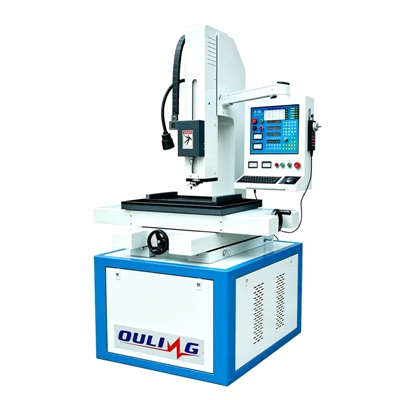
For automotive manufacturers, the question isn’t whether die sinker EDM is useful—it’s how much value it can add to their specific operations. Whether you’re looking to reduce tooling costs, improve part quality for safety-critical components, speed up production cycles for EV parts, or cut down on scrap, die sinker EDM delivers measurable results. As a supplier, I’ve helped dozens of automotive clients navigate the transition to this technology, from selecting the right machine for their production volume to designing custom processes for their unique parts. If you’re ready to explore how die sinker EDM can improve your production, connect with our team to discuss your specific needs. We can walk you through case studies tailored to your component types, help you evaluate the ROI of switching or adding EDM to your line, and provide ongoing support to ensure your process runs smoothly.
Parts EDM References
- American Society of Mechanical Engineers. (2021). Advanced Manufacturing Processes for Automotive Components. ASME Press.
- Groover, M. P. (2020). Fundamentals of Modern Manufacturing: Materials, Processes, and Systems. Wiley.
- Automotive Manufacturing Association. (2022). Lightweighting and Precision Machining for Electric Vehicle Components. AMA Technical Report.
Taizhou Ouling CNC Equipment Co., Ltd.
As one of the most professional die sinker EDM manufacturers and suppliers in China, we’re featured by quality products and good price. Please rest assured to buy advanced die sinker EDM made in China here from our factory. Welcome to contact us for quotation.
Address: No. 9 jingang Road, Yangzhou City Jiangsu Province, China
E-mail: 574751243@qq.com
WebSite: https://www.oulingedm.com/
