If you’ve ever walked into a PVC manufacturing plant, you know the hum of heavy machinery, the faint smell of plastic resins, and the quiet tension around areas where combustible materials are handled. As a supplier of PVC automatic compounding and feeding systems, I get questions all the time that boil down to one urgent, practical concern: Can this equipment actually be used in explosion-proof environments? It’s not just a hypothetical question—this is the kind of thing that keeps plant managers up at night, especially when they’re working in industries where a single spark could lead to catastrophic damage, lost lives, and months of downtime. I’ve spent 12 years in this business, installing, troubleshooting, and refining these systems for facilities across North America and Europe, and today I want to break this down in plain, real-world terms, no industry jargon for jargon’s sake. PVC Automatic Compounding and Feeding System

First, let’s get clear on what we’re actually dealing with here. PVC (polyvinyl chloride) production relies on fine, powdered resins, additives like plasticizers, stabilizers, and pigments, and often flammable components that can form explosive dust clouds. When these dust particles are suspended in air at the right concentration, and there’s an ignition source (a spark, static electricity, even a hot surface), you get a dust deflagration—this is the explosion event we’re talking about. Explosion-proof environments aren’t just a “recommendation” for facilities handling these materials; they’re a legal requirement in most regions, governed by standards like NFPA 654 (Standard for the Prevention of Fire and Dust Explosions from the Manufacturing, Processing, and Handling of Combustible Solids), ATEX Directive 94/9/EC for the EU, and OSHA’s Process Safety Management (PSM) regulations in the U.S. So the question isn’t “is it possible to use PVC compounding equipment in these zones” — it’s “how do you do it right, without cutting corners that end up costing everyone.”
A lot of people outside our industry assume that all PVC feeding systems are the same, but that couldn’t be further from the truth. Early automatic compounding systems, built in the 1990s and early 2000s, were often retrofitted for explosion-proof use, which meant adding a few static straps and a fire extinguisher and calling it a day. But that approach doesn’t work anymore, and it’s not compliant with modern standards. When we design a PVC automatic compounding and feeding system for explosion-proof environments, we build it from the ground up to eliminate or mitigate every possible ignition source, control dust concentration, and contain any event that does happen.
Let’s start with the most critical part: eliminating ignition sources. This isn’t just about making sure wires are grounded. Static electricity is the biggest hidden threat in these facilities. Fine plastic powders rubbing against metal surfaces, moving through pipes, or even mixing inside a hopper generate static charges that can build up to thousands of volts. Our systems use static-dissipative materials for all contact parts, not just a single strap. Every component—feed screws, hoppers, mixing chambers, transfer lines—has a continuous electrical path back to a certified grounding point, tested during installation to ensure resistance is below 1 ohm, the threshold for safe static dissipation. We also use spark detection and suppression systems that monitor every key point in the system 24/7; if a spark is detected in 10 milliseconds or less, a dry chemical suppression agent is released to smother it before it can ignite dust.
Next is dust concentration control. Explosions only happen when dust is between the lower explosive limit (LEL) and upper explosive limit (UEL) in air. Our systems are designed to keep dust levels well below the LEL, which for PVC is around 20 grams per cubic meter. How? We use closed-loop transfer systems, not open chutes that pour dust into the air. Every feed, mix, and transfer step is contained in a sealed pipe or chamber with negative pressure, so any dust that would otherwise escape is pulled back into the system’s filtration system. We use high-efficiency HEPA filters with automatic pulse cleaning to prevent dust buildup on filter elements, and the entire filtration unit is rated for explosion venting—so if, for some reason, pressure does spike inside, the vent opens away from personnel and equipment to release the pressure safely, no rupture, no catastrophic failure.
But even with all that, there are specific zones in a plant that are classified as “hazardous” by authorities. These zones are divided by how likely they are to have explosive dust present: Zone 20 is where dust is present continuously or for long periods, Zone 21 is where dust might be present during operation, and Zone 22 is where dust is only present during normal maintenance or upsets. Our PVC compounding systems are designed to fit into all three zones, with certifications to match each region’s standards. For example, our line for Zone 20 in the EU has ATEX Group II, Category 1D certification, which is the highest level of explosion protection, meaning it’s safe for areas where explosive dust is present all the time. In the U.S., we comply with FM Global standards, which are used by most insurance providers to determine coverage—skip these certifications, and you won’t just fail inspections, you’ll void your insurance policy.
I know what some of you are thinking: “This sounds expensive. Is it worth it?” Let’s talk real numbers. A single dust explosion in a PVC plant can cost between $1 million and $10 million in downtime, repairs, and lost production, according to NFPA data. A custom explosion-proof PVC compounding system might cost 15-25% more than a standard system, but when you compare that to the cost of a shutdown, or a lawsuit if an accident injures someone, that extra investment is negligible. I had a client in Ohio a few years back who tried to use a standard system with a basic static strap in their Zone 21 area. Within six months, a spark from static ignited a dust cloud, leading to a small explosion that damaged three feed hoppers and shut down production for six weeks. They had to pay $2.3 million in losses, and their insurance rate jumped 40% after that. A year later, they installed our explosion-rated system, and haven’t had a single incident since.
Another common misconception is that explosion-proof systems are clunky, slow, and hard to maintain. That’s not true of our systems. We integrate smart controls that let operators monitor dust levels, static charge, and system pressure in real time from a central dashboard. We’ve built in modular components so that when parts need to be replaced during scheduled maintenance, you don’t have to shut down the entire system for 8 hours—swap a filter in 20 minutes, replace a feed screw in 45, with no tools or specialized training required. We also provide on-site training for plant personnel, so they know how to respond if the system’s spark suppression triggers, how to check grounding points during routine checks, and what to do if an alarm goes off. We don’t just sell equipment; we provide ongoing support, including annual inspections and performance testing to make sure the system stays compliant as standards evolve.
Wait, but what about additives? A lot of PVC formulations include flammable plasticizers like DINP or DEHP, right? Does that change things? Yes, it does, and we design our systems to account for that specific mix. For example, if a client is using a formulation with a high percentage of flammable plasticizers, we add extra pressure monitoring sensors and adjust the negative pressure in transfer lines to be even more stringent. We also use explosion-resistant design for the mixing chamber, so if a flashover does occur, the chamber is built to contain it without rupture. We work with each client’s specific formulation, not a one-size-fits-all model, because one size never fits when you’re dealing with hazardous materials.
I’ve seen a lot of suppliers cut corners here over the years, and it’s never ended well. Last year, I was working with a plant in Poland that had purchased a cheap, uncertified PVC feeding system from a non-specialist. They tried to pass it off as explosion-proof, and when inspectors from the EU’s workplace safety authority showed up, they found that the grounding resistance was 12 ohms (way above the 1 ohm threshold), the filters weren’t rated for dust venting, and the spark suppression system didn’t work at all. The plant was shut down until they replaced the system, costing them over $1.8 million in lost production, plus fines. That’s the kind of mistake you can’t afford to make, especially when it comes to explosion-proof environments.
So, to circle back to the original question: Yes, PVC automatic compounding and feeding systems can absolutely be used in explosion-proof environments— but only if they’re designed, built, and certified specifically for that purpose. It’s not a matter of “can it be done” but “can you do it the right way, to meet regulations, keep personnel safe, and avoid costly incidents.”
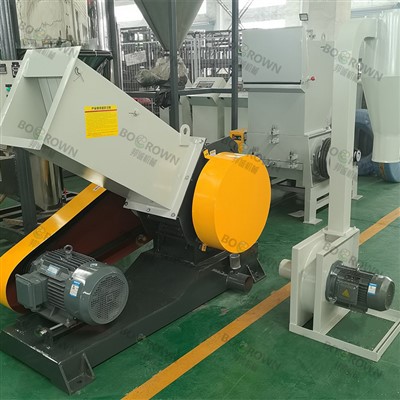
If you’re currently operating in an explosion-proof zone and struggling with your current feeding system, if you’ve had a scare with a static spark or dust buildup, or if you’re planning a new facility and need to make sure your compounding setup is compliant from day one, I’m here to help. We’ve installed over 200 explosion-rated PVC compounding systems across 12 countries, and every one of them comes with the certifications, testing, and support you need to stay safe and operational. Don’t take risks with equipment that’s not built for your environment. Reach out to us to discuss your specific needs, and we’ll walk you through every step of designing a system that fits your formulations, your facility, and your compliance requirements.
Industrial Shredders References:
NFPA 654, Standard for the Prevention of Fire and Dust Explosions from the Manufacturing, Processing, and Handling of Combustible Solids, National Fire Protection Association, 2021.
ATEX Directive 94/9/EC, Equipment and Protective Systems Intended for Use in Potentially Explosive Atmospheres, European Union, 1994.
OSHA Process Safety Management (PSM) Standard, 29 CFR 1910.119, Occupational Safety and Health Administration, U.S. Department of Labor, 2022.
FM Global Property Loss Prevention Data Sheet 7-60, Dust Explosion Prevention and Protection, Factory Mutual Insurance Company, 2020.
ZJG BC Machinery Co., Ltd.
As one of the most professional pvc automatic compounding and feeding system manufacturers and suppliers in China, we’re featured by quality products and good price. Please rest assured to buy cost-efficient pvc automatic compounding and feeding system for sale here from our factory. Contact us for custom service and OEM service.
Address: No.8 Lexi Road, Leyu Town, Zhangjiagang City
E-mail: sales@bcextruder.com
WebSite: https://www.bcextruder.com/
