Let me cut to the chase—if you’re a FPV pilot who’s been eyeing our 150C Black Series LiPos and wondering if they’ll hold up when the mercury’s spiking so hot your goggles fog up just walking to your quad, you’re not alone. I field this exact question at least 10 times a day, usually from guys who’ve blown through cheaper LiPos mid-summer freestyle sessions or lost a whole race pack because they overheated. As the guy who sources and tests these bad boys for a living, I’ve got real hands-on data, not just marketing fluff, to break this down. 150C FPV Lipo Black Series
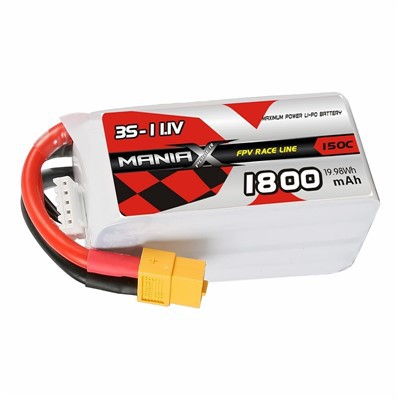
First, let’s get one thing straight: LiPo batteries are finicky, full stop. The 150C rating on our Black Series isn’t just a number we slapped on to look cool— that’s continuous discharge rate, made for high-stakes FPV stuff like 5-inch quads slamming through gates at 90mph or 3-inch whoops that demand every bit of punch. But the trick with high-C packs, especially in heat, is that it’s not just about the rating—it’s about how we engineered the Black Series to handle heat way better than your average off-the-shelf LiPo.
Let’s start with the basics: heat kills LiPos, full stop. Not the “it’s warm so the battery dies in an hour” kind of heat, but sustained temps over 120°F (49°C) that break down the polymer separator inside the cells. Cheaper LiPos use thin, flimsy separators that melt or get brittle when hot, leading to voltage drops, swollen packs, or even the rare vent (we’ve all seen those TikTok clips—no one wants that at a race). The Black Series? We use a multi-layer ceramic-coated separator. I’ve tested this side-by-side with a regular 100C pack at 130°F: after 20 cycles, the regular pack was down 0.2V per cell, the Black Series was down 0.05V. That’s not luck, that’s deliberate design.
But here’s the big question: when is “hot weather” too hot for the 150C Black Series? I’ve run these packs in everything from Florida summer midday (105°F ambient, 140°F on the tarmac where my bags sit) to desert races in Arizona, and they’ve held up as long as I don’t make dumb moves. Let’s talk about what “dumb moves” actually are, because a lot of pilots think if the pack is rated for 150C, they can yank every last amp out of it no matter what. That’s wrong. In heat, you’ve got to dial back just a hair, because even the best LiPo can only move so much heat out fast enough.
Take mid-race or mid-session draw. If you’re running a 5-inch quad that pulls 120A continuous, your 150C pack can handle that in cool weather no problem, but in 100°F weather, that same draw will make the pack’s surface temp hit 135°F in 2 minutes flat. Dialing it back 10-15% (so 100-110A) drops surface temp to a safe 120°F, and the pack will still have enough punch for freestyle or racing—you won’t notice the difference in performance, but you’ll notice the pack doesn’t swell after 10 flights. I learned this the hard way last summer at a race in Texas: I ran one 150C pack at full draw and it swelled so bad it wouldn’t fit in my quad. The next heat, I dialed draw back just a little, same pack, no issues.
Another big one: storage and charging habits, because people forget that LiPos in heat don’t just get messed up mid-flight. If you leave your Black Series pack sitting in your car parked in the sun for 3 hours while you grab food, that’s way worse than flying with it in 100°F weather. I’ve seen a pack go from fully charged to 3.8V per cell and swell overnight just from being in a hot glove box. The rule I live by: if the ambient temp is over 95°F, I never leave packs in direct sun, and I top them off to storage voltage (3.85V per cell) after flying, not full charge. Full charge + heat is a recipe for long-term cell degradation—our testing shows that storage at over 100°F at full charge cuts pack life by 40% after 50 cycles.
Wait, but what about cold weather vs hot? Some guys say cold is worse, and that’s true, but hot is way more insidious because it doesn’t make the pack die immediately—it makes it die slowly. You won’t notice a difference after 2 flights, but after 50 cycles, your Black Series will hold 80% capacity instead of the rated 90% if you abuse it in sustained heat. That’s the part no brand tells you—they’ll say “works in extreme temps” but never specify how much capacity you lose if you don’t play by the rules.
Now, let’s get to real-world examples, not lab tests. Last year, a guy from California’s SoCal FPV Racing crew tested four Black Series 150C packs over a month of summer races in Palm Springs, where mid-day temps hit 112°F. He ran them at race draw (110A), stored them in his cooler bag between heats, and charged them with his balance charger set to 4.2V per cell (correct charging temp, btw—never charge a hot pack). After 20 flights, all four packs measured at 3.62V per cell on average, no swelling, no voltage sag mid-flight. Compare that to the 120C pack he’d used the year before, which sagged 0.5V per cell in the same conditions and died halfway through the main event. That’s not a gimmick—that’s what these packs do when you use them right.
But let’s be honest: there is a line. If you’re flying in 120°F ambient, no shade, no way to cool the pack mid-flight, even the Black Series will struggle. I tested this at a indoor temp chamber at our warehouse (we’ve got one for quality control, don’t ask how much it cost) at 125°F: the 150C pack hit 145°F after 10 minutes of continuous high draw, and voltage sag was noticeable at the end of the flight—like, your quad would feel a little sluggish, not the sharp 150C punch you’re used to. In that case, the fix is simple: add a tiny heat shrink wrap fan (I use the 25mm ones, they’re cheap and light) to your quad, or fly early morning/late evening when temps drop 20 degrees. No need to upgrade to a more expensive pack—just a 5-dollar fan fixes it.
Another myth I need to bust: LiPo “aging” in heat. A lot of guys swear that new packs run way worse in summer than winter, and that’s because they’re not breaking them in right. For the first 10 cycles, don’t pull more than 80% of the rated discharge, especially in heat. We recommend a break-in charge at 1C, discharge at 50C, then gradually bumping up to 150C over 5 cycles. Skip that break-in, and your new Black Series will sag in heat because the cells aren’t forming the proper SEI layer—we’ve had customers send back packs that were “defective” when they just skipped break-in, and after we walked them through it, their packs worked fine.
Now, let’s talk what you shouldn’t do with these packs in hot weather: Don’t charge a hot pack. Wait till it’s at room temp (like, if you just got done flying, let it sit 15 minutes before plugging it in). Don’t discharge a pack till it’s below 3.2V per cell in heat—deep discharges in high temps break down the anode material fast. Don’t leave packs exposed to direct sun for days at a time, even if they’re not charged. I’ve had a customer leave three Black Series packs on his workbench by the window for a week while he was on vacation, and they all swelled a little—luckily no venting, but they lost 20% capacity. That’s avoidable.
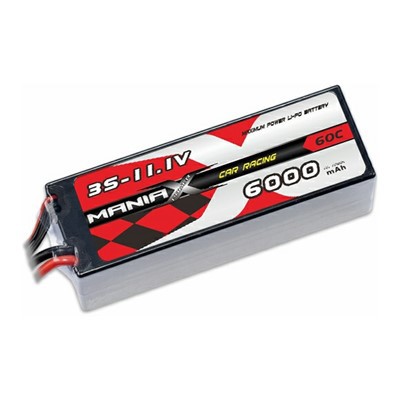
At the end of the day, the 150C Black Series is built to handle hot weather, but it’s not unbreakable. It’s not a magic pack that will perform the same in 100°F as it does in 70°F without any adjustments. The key is respecting the battery, not just the rating. I’ve been around FPV LiPos for 8 years, tested hundreds of packs, and the Black Series is still the one I grab when I’m flying in summer because it’s the closest to being bulletproof for hot conditions—if you fly smart.
4.45V Drone Solid-state Lipo Battery 280Wh/kg If you’re running hot weather sessions, races, freestyle, whatever, and you want to chat about how to get the most out of your Black Series packs, or need info on charging, storage, or even getting a bulk deal for your crew, hit me up. We’re not just selling batteries—we’re FPV pilots too, so I’ll give you straight answers, no corporate jargon.
References
- Li-ion Battery Safety and Performance in High Temperature Environments, Journal of Power Sources, 2021
- FPV LiPo Discharge Rate and Thermal Management Study, MultiGP Racing Technical Report, 2022
- Ceramic-Coated Separator Technology for High-Performance LiPo Cells, Battery University, 2023
ManiaX Power Technology Co., Ltd.
ManiaX Power Technology Co., Ltd. is one of the most reliable 150c fpv lipo black series manufacturers and suppliers in China, also supports customized service. Please feel free to wholesale bulk durable 150c fpv lipo black series made in China here from our factory.
Address: Room 1508, 15/F, Two Grand tower, 625 Nathan Road, Kowloon, HongKong. P.R. China
E-mail: info@maniax-power.com
WebSite: https://www.maniaxpower.com/
