Hey everyone! If you’re reading this, chances are you’re either an owner of an electric passenger tricycle (that’s e-trikes for short) looking to squeeze more power out of your ride, or maybe you’re a fleet manager like me who’s tired of watching your vehicles struggle up hills or leave passengers waiting because of slow get-up-and-go. I’ve been in the e-trike game for over 8 years now—running a supply shop that specializes in parts, repairs, and yes, upgrades—and let me tell you, upgrading your motor isn’t as scary as it sounds. But it’s not just yanking out the old one and slapping a bigger unit in, either. There’s a method to this madness, and I’m gonna walk you through exactly how to do it right, based on what I’ve seen work (and what definitely doesn’t work) for hundreds of my customers. Electric Passenger Tricycle
First off, let’s get one thing straight: why even upgrade your e-trike motor? For most of you, the stock motor that comes with these three-wheelers is fine for flat roads and light use—think a small town with gentle slopes, or a fleet that only runs during the day on main streets. But if you’re in a hilly area? Or if you’re carrying 4-5 passengers regularly, plus their grocery bags or a full load of delivery goods? That stock motor’s gonna work way too hard, burn out faster, and leave you stuck mid-climb more times than you want. I had a guy last year from a hilly suburb in the next state over who brought his e-trike in because he could barely make it up his block without stopping. His stock 500W motor was fried after 2 years, just from hauling passengers up a 15% grade every day. A proper motor upgrade fixed that for him, and he’s been running smooth ever since.
Before you even start shopping for a new motor, you need to do your homework on your current setup. This is the part most people skip, and it’s why so many upgrades go wrong. Let’s break this down. First, check your battery voltage. Most e-trikes run on 48V, but some older models might be 36V, and a few newer heavy-duty ones go up to 60V. You can’t just swap a 60V motor into a 36V system—you’ll either fry the new motor instantly, or it’ll be way underpowered. I’ve also seen people mix battery voltages: like a 48V motor on a 52V battery. That can work, but you have to make sure the motor controller is compatible, otherwise you’re looking at a lot of smoke (not the good kind). Next, check your motor mount size. Those frames are specific—some have a 12mm mount, others 16mm, and if the new motor’s mount is a different size, you’ll either need a adapter plate (which is doable, but adds cost) or you’ll have to modify the frame, which can weaken it. Also, take note of your wheel hub. A lot of e-trike motors are hub-mounted, either front or rear, while some are mid-drive. If your current one is a rear hub motor, a front hub upgrade might throw off your steering balance, especially with passengers on the back seat. That’s a safety thing, right? You don’t want your trike swerving because you swapped the wrong motor location.
Okay, so you’ve checked your battery, mount, and wheel setup. Now what? Picking the right motor is half the battle. Let’s talk power ratings. Stock motors are usually 500W to 750W for passenger e-trikes. For most urban uses, a 1000W motor is a solid upgrade—enough to carry 5 passengers up moderate hills, still efficient enough that your battery life doesn’t plummet. If you’re in a super hilly area, go 1500W, but keep in mind: bigger power isn’t always better. A 2000W motor will drain your battery way faster, and you’ll need a heavier duty controller and battery to match, which adds up in cost. I always tell customers: don’t chase the highest number, chase the number that fits your actual use case. Last quarter, we had a fleet owner who wanted to upgrade all his 10 e-trikes to 2000W because his drivers complained about hills. I talked him down to 1200W, and he saved $300 per trike, and his drivers haven’t had any complaints—turns out, the stock batteries couldn’t handle the 2000W motors, so he would’ve had to upgrade those too. That’s a key point: motor upgrade isn’t a solo project. You have to upgrade the other parts to match, otherwise you’re wasting money.
Let’s list the must-upgrade parts when you swap your motor. First, the controller. The controller is like the brain that tells the motor how much power to use. If your old motor was 500W, the controller was rated for that. A 1000W motor needs a 1000W or higher controller. If you skip this, the controller will burn out in a month. Next, the battery. Your old 48V 12Ah battery might work with a 500W motor, but a 1000W motor will drain it so fast you’ll be recharging twice a day, and it might not provide enough amperage to the motor. For a 1000W motor, you want a 48V 20Ah lithium-ion battery—lighter than lead-acid, holds charge longer, and can handle the higher amperage. Lead-acid batteries are cheaper, but they’re heavy and don’t last as long, so for a motor upgrade, lithium is the way to go. Also, check your wiring. The stock wiring might be thin, and a higher power motor needs thicker gauge wires to carry the current. If you skip changing the wires, they’ll overheat, which is a fire risk. I always include new wiring harnesses with motor upgrades for that exact reason—no one wants a trike that starts smoking mid-route.
Now, the actual installation. Let’s be real: if you’re not handy with tools, don’t try this alone. I see so many people come to my shop with a half-installed motor and a broken trike, because they tried to do it themselves and messed up the controller or the mount. But if you’ve worked on bikes or small engines before, it’s doable. Here’s the step-by-step I give to customers who want to tackle it at home. First, disconnect the battery. This is non-negotiable—you don’t want any short circuits while you’re working. Then, remove the old motor: take off the wheel (if it’s hub-mounted), unbolt the motor mount, disconnect the wiring from the controller, and pull the old motor out. Clean the area where the new motor will go—make sure there’s no dirt or rust, otherwise the new mount won’t sit tight. Next, install the new motor: bolt it into the frame (use the same bolts as the old one, or new ones if they’re included), make sure it’s aligned properly—if it’s a hub motor, the wheel needs to sit straight, no wiggling. Then, connect the wiring. This is where most people mess up: match the wires to the controller. Most motor and controller sets have color-coded wires, but make sure you check the manual—red is power, black is ground, yellow and blue are phase wires. If you mix up the phase wires, the motor will run backwards, which is funny until you’re trying to go forward and your trike is going in circles. Then, install the new controller. The controller usually goes under the seat or in the battery compartment—make sure it’s secured, not sitting in water (those things hate moisture), and connect it to the throttle too. Finally, test it. Reconnect the battery, turn the key to on, and test the trike in a flat, open area first. Make sure the motor runs smoothly, no weird noises, and the throttle works. If it makes a high-pitched whine or doesn’t pick up speed, turn it off and check the wiring—you probably got a wire backwards.
Wait, a few safety tips I can’t stress enough. First, never test the motor while the wheel is on the ground with passengers nearby. That wheel will spin fast, and it can knock someone over. Second, if you’re using a mid-drive motor (these are less common for passenger trikes, but some heavy-duty ones use them), make sure the motor is compatible with your transmission. Mid-drive motors connect to the bike’s chain, so the gear ratio has to match, otherwise you’ll either get no power or the chain will slip. Third, warranty. A lot of people think upgrading the motor will void their trike’s original warranty, but that’s only if you use non-OEM parts. I always recommend OEM or reputable third-party motors that are made specifically for e-passenger trikes—we only stock motors that come with a 1-year warranty, just like the stock ones, so you don’t have to worry. And if something goes wrong during installation, we offer free tech support for anyone who buys parts from us—just shoot us a message, and one of my guys will walk you through it over the phone or video call.
Now, let’s talk cost, because I know that’s a big factor. A motor upgrade for a passenger e-trike isn’t cheap, but it’s way cheaper than buying a new trike. A 1000W motor, matched controller, wiring, and a new battery will run you about $800-$1200, depending on the brand. A new passenger e-trike is $2500-$4000, so that’s a huge saving. And for fleet owners, this pays for itself fast. I had a delivery company that upgraded their 15 trikes last year—they saved an average of $150 per month on repairs because their old motors were burning out, and their drivers could make 2 more trips a day because the trike was faster. That’s a no-brainer, right?
Wait, what about common mistakes people make? Let’s list the top 3, because I see these all the time. Number 1: Upgrading the motor but skipping the battery. I can’t tell you how many people buy a $500 motor and then try to use their old 12Ah battery, and wonder why it only lasts 10 minutes. The battery has to match the motor’s power draw. Number 2: Buying a motor that’s too big. A 2000W motor on a 36V system will not only underperform, but it’ll also put so much strain on the frame that the mounts will break. Number 3: Not aligning the motor correctly. If the hub motor is off-center, it will wear out the tire and the bearings in a few months, which is another repair cost.
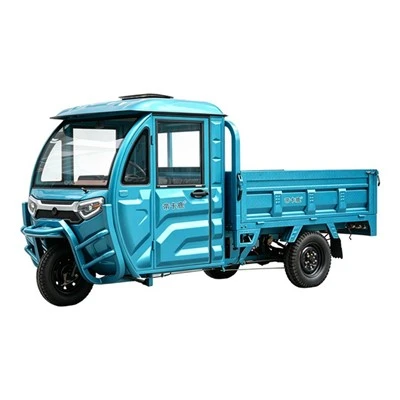
So, is upgrading your e-trike motor worth it? For most people, yes—if you do it right. It’s better performance, longer motor life, and if you’re running a fleet, more revenue from fewer breakdowns. But here’s the thing: if you’re not sure what you’re doing, don’t guess. Reach out to a supplier who knows e-passenger trikes, not just random bike parts. We’ve been doing this long enough that we can tell you exactly what parts work for your specific trike model, we can ship them fast, and we offer installation support. Whether you’re a single owner or a fleet manager, we can help you pick the right upgrade that fits your needs and budget. If you’re ready to stop dealing with underpowered motors, frequent breakdowns, and slow trips, get in touch with our team to talk through your upgrade. We don’t do pushy sales—we just give you honest advice, based on what works for hundreds of our customers over the years.
Standard Motorcycle References
- Electric Vehicle Motor Upgrades: Safety and Compatibility Guidelines, International Electric Transportation Association, 2022
- Passenger Tricycle Performance Report, Global Urban Mobility Institute, 2023
- Lithium-Ion Battery Sizing for Low-Powered Electric Vehicles, Journal of Clean Energy Technologies, 2021
- Common Maintenance Errors in Electric Passenger Trikes, Asian Transport Research Association, 2022
Dikalu Locomotive Technology (Nanjing) Co., Ltd.
With abundant experience, we are one of the most professional electric passenger tricycle manufacturers and suppliers in China. Please feel free to buy high quality electric passenger tricycle made in China here from our factory. Good service and reasonable price are available.
Address: Room 1109, Building 5, Jiangning Wanda Plaza (West Zone), No.68 Zhushan Road, Dongshan Subdistrict, Jiangning District, Nanjing, Jiangsu Province, China
E-mail: merchandising2@zl-international.cn
WebSite: https://www.motorbicycle.net/
