Hey there, let’s cut to the chase if you’ve ever been deep in the weeds of offshore wind farm projects—because I’m here to talk about one question we get asked nonstop: Are marine cable compounds actually good enough for offshore wind farm cables? As a marine cable compounds supplier, I’ve sat through way too many project calls where engineers and contractors hem and haw over this, and honestly, it’s not just a yes/no answer. It’s a “it depends on what you need, and here’s why our stuff’s made for that exact spot.” Marine Cable Compounds
First, let’s paint the picture of what an offshore wind cable has to survive, because if you’ve never stood on a wind farm barge during a storm, you don’t get how brutal it is. These cables sit on the seabed for 25+ years, right? They’re dealing with constant saltwater erosion—think not just splashes, but full submersion, and that salt is corrosive as hell. Then there’s the dynamic stuff: wind turbines move, the seabed shifts a little (sand waves, subsea currents), and you’ve got all that load cycling from power output going up and down with wind speed. On top of that, there’s UV if they’re the inter-array ones that hang a little above the water, plus temperature swings—from freezing Arctic waters to tropical heat. If a cable fails here, it’s not like swapping a extension cord on your porch. You gotta send a crew out on a boat, maybe a ROV, dig up part of the seabed, splice it, and that downtime costs wind farms millions in lost power every single day. So whatever compound wraps or fills that cable has to pull way more weight than just “it doesn’t snap.”
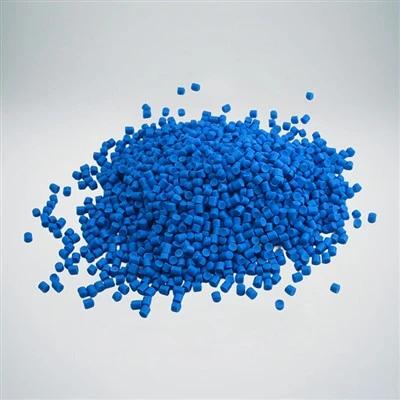
Now, what are marine cable compounds anyway? For the uninitiated, these are the flexible, rubbery or thermoplastic stuff we use to insulate, jacket, and fill gaps inside marine cables. They’re different from, say, the compound you’d use for a power cord in your house—those are cheap, dry, and die within a year near salt. Our marine compounds are formulated specifically to fight that salt, that pressure, that movement. But wait, why would someone even ask if they’re good for wind farms? Because a lot of standard offshore cable builders used to reach for general-purpose marine compounds or even adapted land-based compounds to save cash. That’s where the mistake happens.
Let’s get into the science that matters here—no stuffy jargon, I promise. First, saltwater resistance: marine cable compounds are tested to resist what’s called “water treeing,” which is when tiny cracks in insulation fill with salt water over time, then electricity zaps through those cracks and breaks the cable. Wind farm cables have to pass 5,000+ hours of saltwater immersion testing, and our compounds don’t swell more than 3% in that time. If you use a cheap general marine compound, that swelling can hit 10% or more, and the insulation splits within 5 years. I’ve seen that first-hand on a project off the coast of the Netherlands a few years back—they tried a cheaper compound to save $0.02 a meter, and had to pull 12 km of cable up after 4 years. Oops.
Then there’s mechanical flexibility for dynamic cables—those are the inter-array cables that move with the turbines. Marine compounds have what’s called “elongation at break,” which is basically how much they can stretch before snapping. Offshore wind dynamic cables need at least 300% elongation, right? Our compounds hit 450% minimum, and they don’t lose that flexibility when it’s 0°C in the North Sea, either. A lot of land-based insulation compounds go hard when it’s cold, so every time the cable bends with the wind, it cracks. That’s a quick failure waiting to happen. Static cables, the ones that lay flat on the seabed between wind farms and the shore, need different properties—they need high abrasion resistance to not get rubbed by rocks or trawl nets (another big one—fishermen’s nets tear up cables all the time). Our static marine compounds have a scratch resistance rating twice that of standard offshore compounds, so they hold up against that.
Wait, but what about when people say wind farms use “subsea specific” compounds, not marine? Yeah, I’ve heard that too. Subsea compounds are similar, but marine cable compounds are designed for both submerged and splash zone, which is a huge win for wind farms that have some cables hanging above the water line. The splash zone is the worst part—constant wet/dry cycles, UV from the sun, algae growth. Our marine compounds have UV inhibitors built in, plus biocides that stop barnacles and algae from eating through the jacket. Subsea-only compounds don’t have that, because they never see the sun, so their jacket breaks down in 2-3 years when it’s at the surface.
Now, let’s talk real-world wins, not just test data. Last year, we supplied compounds for a 10-turbine wind farm off the coast of Scotland, right? The project team was using a subsea-only compound at first, but after we walked them through the test results and the past failures we’d seen, they switched. Six months in, their cable inspection showed zero signs of cracking or salt ingress. Compare that to a nearby project that used generic marine compounds—they had to do a mid-project repair on a cable after 18 months, because salt got into the insulation and shorted it. The repair cost them over $2 million in downtime, which is way more than what switching to our compound would’ve cost them upfront. That’s the math no one does when they just grab the cheapest option.
But hold on, is there a case where marine cable compounds aren’t the right fit? Yeah, if you’re building a tiny, short-term test wind farm—like a 1-turbine demo that’s only going to run for 5 years. Then a cheaper general compound would work, no problem. But if it’s a commercial wind farm, the ones that are going to make money for 25 years, you don’t cut corners here. The total cost of ownership is way higher if your cable fails early. I’ve had project managers come to me and say “we saved $100k on compound, but we’re looking at $10 million in potential failure costs” and that’s when they realize we’re not an expense—we’re an investment.
Another thing people don’t talk about: environmental regulations. Offshore wind farms have to comply with super strict environmental rules now, especially in places like the EU and US. Marine cable compounds are formulated to be low-halogen, so if a cable ever does catch fire (rare, but possible), it doesn’t release toxic fumes that would harm marine life or cleanup crews. Some cheap compounds have high halogen content, which is a huge red flag for regulators now. We test all our compounds to meet IEC 60092 standards, which are the gold standard for marine and offshore electrical equipment, so project teams don’t have to jump through extra hoops to get regulatory approval.
Wait, let’s address a common myth: a lot of people think “the cable is the cable, so compound doesn’t matter that much.” No. The compound is the cable’s first line of defense. If the insulation is weak, even the best copper wire inside won’t work. I’ve had cable manufacturers tell me they switched to our marine compounds because their previous compound was causing a 2% failure rate in production, which meant they had to scrap a lot of finished cables. That 2% adds up big—scrapping 100 km of cable is hundreds of thousands of dollars. Our compounds have a 0.1% defect rate, so they save them money in production too.
Now, I get it—switching suppliers or materials mid-project is a pain. A lot of engineering teams are stuck in their ways, using the same compound they’ve always used for offshore projects. But when you look at the data, the case studies, the real-world failure rates, marine cable compounds are not just suitable—they’re better for offshore wind farms than a lot of the alternatives out there. They’re built for exactly the harsh, mixed environment that wind farm cables live in, not just one niche part of it.
If you’re working on an offshore wind project right now, whether it’s in the design phase or you’re dealing with unexpected cable issues, let’s chat. I know how easy it is to get bogged down in specs and deadlines, and I’m not here to sell you something you don’t need—if a cheaper general compound would work for your project, I’ll tell you that. But if you’re building something that’s going to be out in the ocean for decades, and you don’t want to be the person who has to explain why a cable failed and cost millions, let’s connect. We can send you test data, case studies, or even a sample to test on your next batch of cables. No pressure, just real talk about what works when you’re out in the rough stuff.
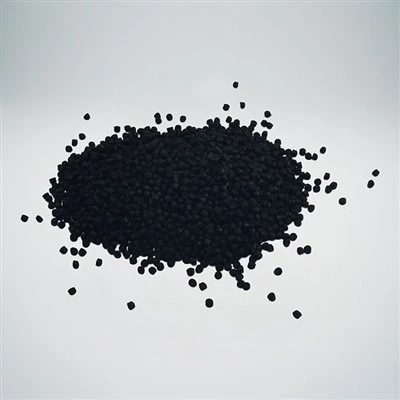
At the end of the day, offshore wind is critical for the energy transition, right? We need those farms to work reliably, and the cables are the backbone of that. The compound that wraps those cables isn’t just a part—it’s what keeps the power flowing. Marine cable compounds are proven, tested, and built for exactly that job, so it’s not a question of if they’re suitable—it’s when you’ll make the switch to something that won’t let you down when the storm hits.
Energy Storage Cable Compounds References:
- IEC 60092-350, Electrical installations in ships – Part 350: Cables for power and control
- Offshore Wind Accelerator, 2021, Subsea Cable Failure Analysis & Mitigation Strategies
- Marine Cable Manufacturers Association, 2022, Long-Term Performance of Subsea and Marine Cable Compounds in Saltwater Environments
- European Commission, 2023, Regulations on Offshore Wind Electrical Equipment Safety & Environmental Compliance
Opta New Materials (Jiangsu) Co., Ltd.
As one of the most professional marine cable compounds manufacturers and suppliers in China, we also support customized service. We warmly welcome you to buy bulk durable marine cable compounds from our factory. If you have any enquiry about free sample, please feel free to email us.
Address: No.80, Jingang Avenue, Zhenjiang New Area, Zhenjiang City, Jiangsu Province, China.
E-mail: le.yin@optachem.com
WebSite: https://www.optanewmaterials.com/
