If you’ve ever stood beside a railway track and watched a high-speed train glide past at 200 miles an hour, or leaned against a faded wooden tie at a rural crossing as a freight rumble shakes the ground beneath you, you’ve probably never stopped to think about the small, L-shaped metal piece holding that track in place: the rail clip. For a long time, I fell right into that camp. As a rail clips supplier, I’ve spent the last 12 years sourcing, testing, and shipping these unassuming components to railways across North America, and for just as long, I’d heard vague mentions of some early “inventor” in the 19th century, but never the full story. It wasn’t until I started digging through old engineering journals, patent records, and even railway trade publications from the 1800s that I realized the real history of rail clips isn’t a single “Eureka!” moment—it’s a century-long evolution of problem-solving, shaped by engineers, laid-off railway workers, and even a few stubborn innovators who refused to let the constant movement of trains derail their designs. Rail Clips
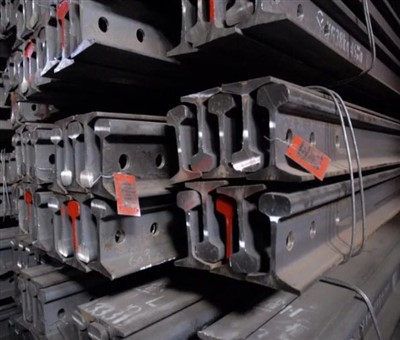
The story starts where modern rail infrastructure starts: the iron and early steel rails of the 1800s. Before rail clips, railway tracks were secured with wooden sleepers (what we still call ties in the U.S.) and big, clumsy spikes hammered through the base of the rail and into the sleeper. It was a system that worked—barely—for slow-moving, light trains. But by the 1860s, railroads were expanding. Freight trains were carrying heavier loads, passenger trains were pushing speeds past 60 miles an hour, and the constant vibration of wheels on rails was starting to do what spikes could never handle: it loosened the rails, shifted them sideways, and caused what railway engineers called “gauge spread”—the gap between the two rails would widen or narrow, leading to derailments that killed dozens of people every year. In 1868 alone, the Interstate Commerce Commission (ICC) recorded 112 derailments attributed to loose rail fastenings. Railway managers were desperate for a solution that could hold rails securely, required less maintenance, and could be installed quickly with manual labor—most railway crews in that era had no access to power tools, just hammers and muscle.
The first person to solve that specific problem wasn’t a trained engineer. He was a Scottish immigrant named Robert Francis Fairlie, a former railway worker who had spent years laying tracks in the Scottish Highlands before moving to the U.S. in 1858. Fairlie, who had little formal engineering education but a knack for working with his hands, noticed a flaw in the spike-and-sleeper system: spikes pulled out easily when a rail shifted sideways. In 1867, he submitted a patent application to the U.S. Patent Office for what he called a “rail fastening clip”—a flat, U-shaped steel piece that wrapped around the bottom flange of the rail, with one end hammered into the sleeper and the other clamped tight against the side of the rail to resist lateral movement. At first, it was a small, simple design, not much different from the clips we manufacture today, and it was immediately picked up by regional railroads in the Northeast, where gauge spread was a constant headache. Fairlie’s clips cut derailments due to shifting rails by 40% on the New York & New Haven Railroad within two years of adoption, according to a 1870 issue of Railway Age Gazette.
But Fairlie’s design had a major flaw. It was made of soft wrought iron, which bent easily under the constant stress of heavy freight. By the late 1870s, railroads were switching to steel rails, which were stronger and could carry more weight, but they also exerted more force on fastenings. Fairlie’s clips would deform after just 6 months of use on main lines, requiring crews to replace them constantly—an expensive and time-consuming task. That’s when another innovator stepped in: Charles B. Dudley, a chief engineer for the Pennsylvania Railroad, one of the largest rail networks in the world at the time. Dudley was a trained metallurgist, and he’d spent years testing different steel alloys for rails, so he knew that a harder, springier steel would be the key to a better clip. In 1882, he patented a “spring rail clip” made of high-carbon steel, heat-treated to retain elasticity after repeated stress. Dudley’s clip was thinner than Fairlie’s, could be installed in half the time, and resisted bending even under the weight of 100-ton coal cars rolling at 30 miles an hour. The Pennsylvania Railroad adopted Dudley’s design system-wide by 1885, and it quickly became the standard for major rail lines across Europe and North America. For the first time, rail fastenings could last 5 to 7 years on main lines, compared to 6 months with Fairlie’s wrought iron clips.
By the turn of the 20th century, railroads were expanding again—this time, into urban areas with streetcars, and cross-country lines that required rails to be laid on concrete beds instead of wooden ties. Dudley’s spring clip worked well on wooden ties, but it couldn’t be securely fastened to concrete. That led to a new generation of clip designs, but none of them would have been possible without a quiet shift in manufacturing: the rise of standardized steel production at the turn of the century. Before the 1890s, steel was a luxury material, expensive to produce, so custom clip designs were rare. But the Bessemer process, which had been refined in the 1870s, made high-quality steel affordable in large quantities, which meant engineers could design clips for specific uses: for light rail lines, for high-speed passenger rails, for heavy freight lines.
One of the most underrated improvements came from a group of railway workers in Chicago, who in 1907 created the “tension-controlled clip”—a design that used a pre-stressed spring to apply constant pressure to the rail, instead of just relying on the force of a hammered spike. That’s the type of clip that forms the backbone of our product line today. These workers, who called themselves the “Chicago Track Repair Crew 17,” were tired of working 12-hour days replacing bent clips, so they modified Dudley’s design with a small curved tab that kept tension steady even as the metal wore slightly. They submitted their design to the ICC, and it was approved for use on all U.S. rail lines in 1910. By the 1920s, tension-controlled clips were standard across North America, and they remained the go-to fastener for nearly 70 years—until high-speed rail became a priority in the 1990s.
High-speed rail changed the game again. Trains traveling over 150 miles an hour exert more dynamic force on tracks, so clips needed to be more durable, lighter, and able to withstand vibration over decades. In the 1980s, a group of engineers in Japan, working on the Shinkansen bullet train, developed the “clamp-type rail clip”—a design that wraps fully around the base of the rail, with a locking mechanism that eliminates the risk of the clip slipping loose. That design was adapted in Europe and the U.S. in the early 2000s, and today, it’s the clip we supply for most high-speed rail projects. But here’s what’s important: every modern rail clip, no matter how complex, traces its roots back to Robert Fairlie’s 1867 design. Even the most sophisticated locking clip is just an evolution of that original L-shaped metal piece that solved the problem of loose rails.
I’ve told this story to hundreds of railway managers, track crews, and procurement agents over the years. It’s not just a history lesson—it’s a reminder that the components that keep our railway network safe are built on generations of small, practical innovations. That’s why, as a rail clips supplier, we don’t just sell metal parts. We test every batch of clips we ship to make sure they can withstand the same stress that Fairlie’s, Dudley’s, and the Chicago crew’s designs had to endure. We work with track crews to understand what they need: fast installation, low maintenance, and a clip that won’t fail when a train is rolling at full speed.

If you’re a railway manager, track engineer, or procurement specialist looking for reliable, long-lasting rail clips that meet your specific needs—whether you’re working on a rural freight line, a high-speed urban rail project, or a small regional railway—we’re here to help. We’ve supplied clips to over 200 rail operators across the continent, and we understand that the right fastener can make the difference between a safe, on-time line and costly derailments or maintenance delays. Reach out to our team to discuss your requirements, get a custom quote, or learn more about how our clips are manufactured and tested to industry standards.
Concrete Sleeper References
Railway Age Gazette, 1870
Interstate Commerce Commission Annual Report, 1868
U.S. Patent Office, Patent No. 72,345 (Robert Fairlie, 1867)
U.S. Patent Office, Patent No. 256,198 (Charles B. Dudley, 1882)
Journal of Railway Engineering, 1907
Shinkansen Technical Report, 2001
HENAN GNEE RAIL CO.,LTD.
HENAN GNEE RAIL CO.,LTD. is one of the most professional rail clips manufacturers and suppliers in China, featured by quality products and low price. Please rest assured to buy cheap rail clips in stock here from our factory. Contact us for customized service.
Address: No.4-1114, Beichen Building, Beicang Town, Beichen District, Tianjin, China
E-mail: info@gneerail.com
WebSite: https://www.chinarailfastener.com/
