Checking if Medium Density Fiberboard (MDF) meets quality standards is crucial for us as an MDF supplier. It’s not just about selling a product; it’s about delivering something that our customers can rely on for their various projects. In this blog, I’ll share some practical ways to ensure the MDF we supply meets the required quality benchmarks. MDF
Visual Inspection
The first step in quality – checking MDF is a simple visual examination. When I receive a batch of MDF, I start by looking at the surface. It should be smooth and free of any visible cracks, chips, or knots. These imperfections can weaken the board and make it less suitable for use.
For example, if there are large cracks on the surface, it could indicate internal stress or improper manufacturing. This might cause the board to break or split during installation or use. Also, rough areas can be a sign of poor sanding, which can make it difficult to paint or finish the MDF properly.
The color of the MDF is also important. It should be consistent across the board. If there are discolored patches, it could be a sign of moisture damage or chemical imbalance during the manufacturing process. Moisture – damaged MDF is more prone to warping and fungal growth, which is a big no – no for our customers.
Density and Thickness Measurement
Density is one of the key indicators of MDF quality. I always have a density meter on hand to measure the density of the MDF. The density of good – quality MDF usually ranges from 600 to 800 kg/m³. If the density is too low, the board may be too soft and not very durable. On the other hand, if the density is too high, it can be difficult to cut and nail.
Thickness is another important factor. I use a caliper to measure the thickness at different points on the board. The thickness should be uniform within a certain tolerance. For example, if we claim to supply 18 – mm thick MDF, the actual thickness should be within a range like 17.5 – 18.5 mm. Any significant deviation in thickness can cause problems during installation, especially when using the MDF for cabinetry or furniture where precise dimensions are crucial.
Moisture Content Testing
Moisture content is a critical aspect of MDF quality. Excessive moisture can lead to warping, swelling, and the growth of mold and mildew. I use a moisture meter to check the moisture content of the MDF. The ideal moisture content for MDF is between 6% and 10%.
If the moisture content is too high, I’ll ask the manufacturer about the storage and drying processes. It could be that the boards were not dried properly during production or were stored in a humid environment. Storing the wet MDF for a long time can significantly reduce its lifespan and performance.
Bonding Quality
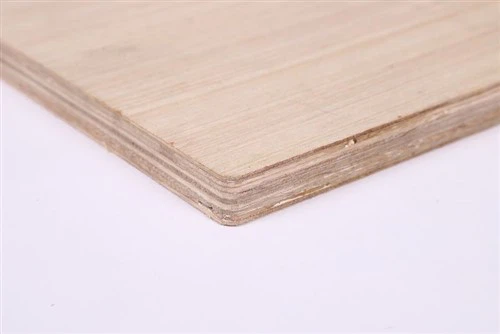
The bonding quality of the wood fibers in the MDF is vital. One way to check this is by looking at the edges of the board. A well – bonded MDF should have a clean, smooth edge without any signs of delamination. Delamination occurs when the layers of the MDF start to separate, which can happen if the adhesive used during manufacturing is of poor quality or if the manufacturing process was not properly controlled.
I also sometimes do a simple nail – pulling test. I drive a nail into the MDF and then try to pull it out. If the board holds the nail firmly, it indicates good bonding. If the nail pulls out easily, leaving a large hole and pulling out fibers with it, it’s a sign that the bonding is weak.
Strength and Rigidity
Strength and rigidity are important, especially when the MDF will be used for load – bearing applications. I often perform a simple bending test. I place the MDF on two supports at a certain distance apart and then apply a small amount of weight in the middle. A quality MDF should not bend excessively or break under normal pressure.
If the board is too flexible, it may not be suitable for applications like shelving or countertops. I also check for any signs of internal weaknesses when handling the board. For example, if I can feel a "give" or a soft spot in the MDF, it could indicate a problem with the manufacturing process or the quality of the raw materials.
Formaldehyde Emission
Formaldehyde is a chemical that can be emitted from MDF. High levels of formaldehyde emissions can be harmful to human health, so it’s essential to ensure that our MDF meets the relevant environmental standards. We send samples to a professional laboratory for formaldehyde emission testing regularly.
The test results are usually classified into different levels, such as E1, E2, etc. E1 – grade MDF has relatively low formaldehyde emissions and is considered safe for indoor use. If our MDF doesn’t meet the E1 standard, we work with the manufacturer to improve the production process to reduce formaldehyde emissions.
Customer Feedback and Field Performance
Finally, customer feedback is an invaluable source of information about the quality of our MDF. We encourage our customers to share their experiences with our products. If they report issues like warping, delamination, or poor finishability, we take it seriously and investigate the cause.

We also keep an eye on the field performance of our MDF. For example, if we supply MDF for a large construction project, we follow up with the contractor to see how the boards are holding up over time. This real – world feedback helps us to continuously improve the quality of our products.
Marine Plywood As a supplier, we’re committed to providing high – quality MDF to our customers. By using these methods to check the quality of our MDF, we can ensure that our products meet or exceed the quality standards. If you’re in the market for MDF for your next project, we’d love to talk to you about our offerings. We’re confident that our MDF will meet your needs in terms of quality and performance.
References
- Wood – Based Panels Handbook
- Standards for Medium Density Fiberboard
Everwood Resources
As one of the leading mdf manufacturers and suppliers in China, we warmly welcome you to wholesale bulk mdf in stock here from our factory. All customized products are with high quality and competitive price.
Address: Fei County, Linyi City, Shandong Province, China
E-mail: 616812166@qq.com
WebSite: https://www.chinaeverwood.com/
