Hey there! I’m a supplier of disposable surgical gowns, and today I wanna chat about how the fabric of these gowns affects their performance. Disposable Surgical Gowns

The Basics of Disposable Surgical Gown Fabrics
First off, let’s talk about the different types of fabrics used in disposable surgical gowns. There are mainly three types: non – woven fabrics, spunbond – meltblown – spunbond (SMS) fabrics, and laminated fabrics.
Non – woven fabrics are quite common. They’re made by bonding or interlocking fibers together. They’re relatively inexpensive to produce, which makes them a popular choice for disposable surgical gowns. These fabrics are lightweight and breathable, which is great for the comfort of the medical staff wearing them. However, they might not offer the highest level of barrier protection. For example, they might have a higher chance of allowing small particles or fluids to pass through compared to some other fabrics.
SMS fabrics are a step up in terms of performance. The spunbond layers on the outside provide strength and durability, while the meltblown layer in the middle acts as a barrier. This combination gives SMS fabrics better filtration and fluid resistance. They can block a significant amount of bacteria and viruses, making them suitable for a wide range of surgical procedures.
Laminated fabrics are the top – of – the – line option. They’re made by bonding different layers of materials together, often with a film in the middle. This film provides an excellent barrier against fluids, bacteria, and viruses. Laminated fabrics are very effective in preventing cross – contamination during surgeries, but they can be more expensive and less breathable than non – woven or SMS fabrics.
How Fabric Affects Barrier Performance
The main job of a surgical gown is to act as a barrier between the patient and the medical staff. The fabric plays a crucial role in how well this barrier works.
Let’s start with fluid resistance. In a surgical setting, there’s a lot of blood and other bodily fluids around. A good surgical gown fabric should be able to resist these fluids from penetrating through. Non – woven fabrics might not be as good at this as SMS or laminated fabrics. SMS fabrics have a better structure that can prevent fluids from seeping through, and laminated fabrics are even more effective. For example, in a high – risk surgical procedure where there’s a lot of blood loss, a gown made of a laminated fabric would be much more reliable in protecting the medical staff from exposure to blood – borne pathogens.
Filtration is another important aspect. Surgical gowns need to filter out bacteria and viruses. The meltblown layer in SMS fabrics is designed to do just that. It has a fine structure that can trap small particles, including bacteria and some viruses. Laminated fabrics also have excellent filtration capabilities due to the film layer. Non – woven fabrics, on the other hand, might not have the same level of filtration, which could pose a risk in a surgical environment.
Impact on Comfort
Comfort is also a big deal when it comes to surgical gowns. Medical staff have to wear these gowns for long hours during surgeries, so they need to be comfortable.
Non – woven fabrics are usually the most breathable. They allow air to pass through, which helps keep the wearer cool. This is especially important in a hot operating room. However, as I mentioned earlier, they might not offer the best protection. SMS fabrics are a bit less breathable than non – woven fabrics because of the meltblown layer, but they still provide a reasonable level of comfort. Laminated fabrics are the least breathable because of the film layer. This can make the wearer feel hot and sweaty, but in high – risk situations, the protection they offer often outweighs the comfort factor.
Durability and Tear Resistance
In a surgical environment, gowns need to be durable. They can get caught on equipment or accidentally pulled during procedures. The fabric of the gown affects its durability and tear resistance.
Non – woven fabrics are relatively weak and can tear easily. They’re not the best choice for procedures where there’s a lot of movement and potential for the gown to get snagged. SMS fabrics are stronger than non – woven fabrics because of the spunbond layers. They can withstand more stress and are less likely to tear. Laminated fabrics are the most durable. The bonding of the different layers makes them very resistant to tearing, which is important in a high – pressure surgical environment.
Cost – Effectiveness
As a supplier, I know that cost is always a consideration for hospitals and medical facilities. Non – woven fabrics are the cheapest option. They’re easy to produce and require less raw material, so they’re a good choice for low – risk procedures or when cost is a major factor. SMS fabrics are a bit more expensive because of the additional meltblown layer, but they offer better performance. Laminated fabrics are the most expensive, but they provide the highest level of protection.
Hospitals need to balance the cost with the level of protection required for different surgical procedures. For routine surgeries, non – woven or SMS gowns might be sufficient, but for high – risk procedures, laminated gowns are often the better choice.
Conclusion
So, as you can see, the fabric of disposable surgical gowns has a huge impact on their performance. From barrier protection to comfort, durability, and cost – effectiveness, each type of fabric has its own pros and cons.
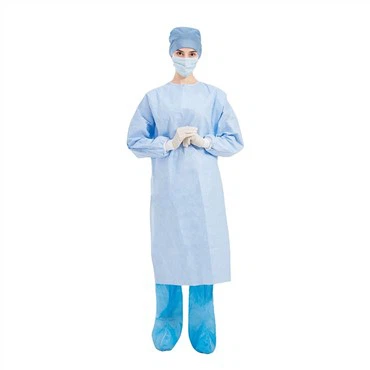
If you’re in the market for disposable surgical gowns, it’s important to consider the specific needs of your medical facility. Whether you need a high – level of protection for complex surgeries or a more cost – effective option for routine procedures, I can help you find the right gown.
Insulation Vacuum Bag If you’re interested in learning more about our disposable surgical gowns or want to discuss a potential purchase, don’t hesitate to reach out. We’re here to provide you with the best products and solutions for your surgical gown needs.
References
- ASTM International. (2021). Standard performance specification for protective clothing for use in health care facilities.
- Centers for Disease Control and Prevention. (2020). Guidelines for isolation precautions: preventing transmission of infectious agents in healthcare settings.
Xiantao Yunhua Protective Products Co., Ltd
We’re professional disposable surgical gowns manufacturers and suppliers in China, specialized in providing high quality customized products. We warmly welcome you to buy high-grade disposable surgical gowns made in China here from our factory. For free sample, contact us now.
Address: Xinpan Road, Yanglinwei Town, Xiantao City, Hubei, China
E-mail: dean@yunhuaprotective.com
WebSite: https://www.yunhua-protective.com/
