LED backlights have become an integral part of various electronic devices, from smartphones and tablets to large – screen TVs and monitors. One of the frequently asked questions in the market is whether LED backlights can be dimmed. As an experienced LED Backlight supplier, I’m here to share in – depth knowledge on this topic. LED Backlight

The Basics of LED Backlighting
Before delving into the dimming aspect, it’s essential to understand how LED backlighting works. LEDs, or Light – Emitting Diodes, are semiconductor devices that emit light when an electric current passes through them. In the context of backlighting, a series of LEDs are arranged in a specific pattern, such as an array. These LEDs provide the illumination that allows the display to show images and colors.
There are two main types of LED backlighting technologies: Edge – Lit and Direct – Lit. In edge – lit backlighting, LEDs are placed around the edges of the display panel. The light is then directed across the panel using a light – guide plate. This technology is commonly used in thinner displays due to its space – saving design. On the other hand, direct – lit backlighting has LEDs placed directly behind the display panel. This provides more uniform illumination and better control over local dimming, which is particularly useful for high – contrast displays.
The Feasibility of Dimming LED Backlights
The short answer is yes, LED backlights can be dimmed. In fact, the ability to dim LED backlights is one of the major advantages of using LEDs over traditional lighting sources like cold – cathode fluorescent lamps (CCFLs). There are several methods for dimming LED backlights, each with its own characteristics and applications.
Pulse – Width Modulation (PWM)
PWM is one of the most commonly used methods for dimming LED backlights. This technique involves rapidly turning the LEDs on and off at a high frequency. The human eye perceives the average brightness of the LEDs based on the ratio of the on – time to the total cycle time, known as the duty cycle. For example, if the duty cycle is 50%, the LEDs are on for half of the time and off for the other half, resulting in a perceived brightness that is approximately half of the maximum brightness.
The main advantage of PWM is its simplicity and efficiency. It allows for a wide range of dimming levels, from very low brightness to full brightness. Additionally, PWM dimming does not significantly affect the color quality of the LEDs, as the color temperature remains relatively stable throughout the dimming range. However, one potential drawback is the possibility of flicker, especially at low frequencies. Flicker can cause eye strain and discomfort for some users, so modern PWM – based dimming systems often operate at frequencies above the range where flicker is noticeable (usually above 200 Hz).
Analog Dimming
Analog dimming involves reducing the current flowing through the LEDs to lower their brightness. As the current decreases, the light output of the LEDs also decreases. Unlike PWM, which works by changing the on – off ratio, analog dimming continuously adjusts the electrical current.
One of the benefits of analog dimming is that it does not produce flicker, as the LEDs are always on, just with a reduced current. However, analog dimming has some limitations. At very low currents, the color of the LEDs may shift slightly, which can affect the color accuracy of the display. Also, the dimming range of analog dimming is typically more limited compared to PWM. In some cases, it may be difficult to achieve very low brightness levels without sacrificing color quality.
Hybrid Dimming
To take advantage of the benefits of both PWM and analog dimming, many manufacturers use a hybrid dimming approach. This method combines the wide dimming range of PWM with the flicker – free operation of analog dimming. For example, at higher brightness levels, the system may use PWM to achieve a wide range of adjustment. As the brightness needs to be reduced further, the system can switch to analog dimming to eliminate any potential flicker at low brightness.
Applications of Dimmable LED Backlights
The ability to dim LED backlights has numerous applications across different industries.
Consumer Electronics
In smartphones, tablets, and laptops, dimmable LED backlights are crucial for providing a comfortable viewing experience in various lighting conditions. For example, in a dark room, the user can dim the backlight to reduce eye strain. Conversely, in bright sunlight, the backlight can be set to maximum brightness to ensure visibility.
In televisions, dimmable LED backlights are used to enhance the contrast ratio. By dimming the backlight in dark areas of the image and increasing it in bright areas, the TV can achieve deeper blacks and more vibrant colors, resulting in a more immersive viewing experience.
Automotive Displays
Automotive displays, such as instrument clusters and infotainment screens, also benefit from dimmable LED backlights. During the day, the backlight can be set to a high brightness level to ensure clear visibility in sunlight. At night, the backlight can be dimmed to prevent glare and distraction for the driver.
Industrial and Medical Displays
In industrial and medical applications, where accurate color representation and visibility are essential, dimmable LED backlights are used to adapt to different working environments. For example, in a laboratory, the backlight of a monitor can be dimmed to reduce reflections and improve the clarity of microscopic images.
Considerations for Dimmable LED Backlight Design
When designing dimmable LED backlights, several factors need to be considered.
Color Consistency
As mentioned earlier, both PWM and analog dimming can potentially affect the color of the LEDs. To ensure color consistency throughout the dimming range, manufacturers need to carefully select the LEDs and the dimming method. Advanced color – calibration techniques can also be used to compensate for any color shifts.
Efficiency
Efficiency is an important consideration, especially for battery – powered devices. Dimming methods that consume less power while achieving the desired brightness levels are preferred. For example, PWM dimming is generally more efficient than some other methods, as the LEDs are either fully on or fully off, reducing the overall power consumption.
Flicker
Flicker is a significant concern, as it can cause discomfort and health issues for users. Designers need to ensure that the dimming frequency is high enough to avoid visible flicker. Additionally, using hybrid dimming or other flicker – reducing techniques can help improve the user experience.
Our Role as an LED Backlight Supplier
As an LED Backlight supplier, we understand the importance of providing high – quality dimmable LED backlights. We have a team of experienced engineers who are well – versed in the latest dimming technologies. We offer a wide range of LED backlights with different dimming capabilities to meet the diverse needs of our customers.
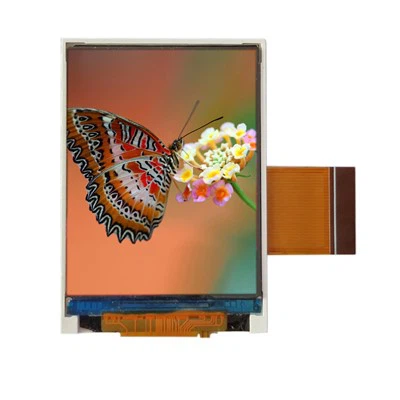
Whether you are a consumer electronics manufacturer looking for backlights for your next smartphone or a medical device company in need of a high – precision display backlight, we can provide customized solutions. Our products are designed to offer excellent color consistency, high efficiency, and minimal flicker.
Segment LCD Display If you are interested in learning more about our dimmable LED backlights or would like to discuss a potential project, we encourage you to reach out to us. We are always ready to engage in in – depth discussions and provide you with the best possible solutions for your LED backlighting needs.
References
- "LED Lighting Handbook" by John C. C. Fan
- "Fundamentals of Lighting Technology" by Michael F. Korns
- Industry whitepapers on LED backlighting and dimming technologies from various semiconductor manufacturers
Chenzhou Haili Microelectronics Technology Co., Ltd.
As one of the most professional LED backlight manufacturers and suppliers in China, we’re featured by quality products and low price. Please rest assured to wholesale custom made LED backlight made in China here from our factory.
Address: Haili Industrial Park Phase II, East side No.66 Wangxian Road, Bailutang Town, Suxian District, Chenzhou City, Hunan Province, China
E-mail: sales1@hlwlcd.com
WebSite: https://www.haililcd.com/
