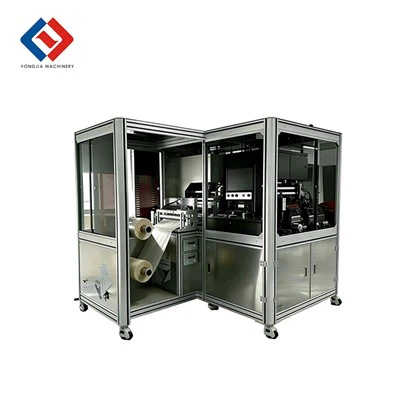
As a trusted supplier of hot pressing machines, I’m often asked about the versatility of our equipment, especially in the context of automotive materials. The automotive industry is a complex and demanding sector where precision, durability, and efficiency are non – negotiable. In this blog, I’ll explore whether a hot pressing machine can be used for automotive materials, going into the technical aspects, the benefits, and the types of automotive materials that can be processed. Hot Pressing Machine
Technical Aspects of Using Hot Pressing Machines for Automotive Materials
Hot pressing machines operate on a simple yet effective principle. They use a combination of heat and pressure to shape or bond materials. In the automotive industry, this process is crucial as it enables the creation of high – quality components with specific mechanical properties.
The heating element in a hot pressing machine is designed to reach precisely controlled temperatures. Automotive materials often require specific temperature ranges for optimal processing. For example, thermoplastic polymers used in car interiors and certain body parts need to be heated to a temperature where they become malleable but not degraded. Our hot pressing machines can be adjusted to maintain a stable temperature within a narrow margin, ensuring consistent quality across batches.
The pressure exerted by the machine is equally important. Different automotive materials have different pressure requirements. Composite materials, which are increasingly popular in modern vehicles for their lightweight and high – strength properties, need significant pressure to ensure proper consolidation of the fibers and the matrix. Our hot pressing machines are engineered to provide uniform pressure over the entire surface of the material, preventing weak spots and ensuring the structural integrity of the final product.
Benefits of Using Hot Pressing Machines for Automotive Industry
Enhanced Mechanical Properties
One of the primary benefits of using hot pressing for automotive materials is the improvement in mechanical properties. When a material is hot – pressed, the molecular structure is reorganized, leading to increased strength, stiffness, and impact resistance. This is particularly important for automotive components such as suspension parts and engine mounts, which need to withstand high stresses and vibrations.
Lightweighting
The automotive industry is constantly striving to reduce vehicle weight to improve fuel efficiency and reduce emissions. Hot pressing can be used to manufacture lightweight composite materials. These materials are made up of strong fibers, such as carbon fiber or glass fiber, embedded in a polymer matrix. By using hot pressing, we can create complex shapes with minimal material waste, resulting in components that are both lightweight and strong.
Design Flexibility
Hot pressing machines offer a high degree of design flexibility. They can be used to create components with intricate shapes, which is essential for modern automotive design. For example, custom – designed dashboard panels and door interiors can be produced using hot pressing technology. This allows automotive manufacturers to differentiate their products visually and functionally.
Cost – Effectiveness
In the long run, using hot pressing machines can be cost – effective for the automotive industry. The process is automated, which reduces labor costs and increases production efficiency. Additionally, the high – quality products produced by hot pressing have a lower defect rate, reducing waste and rework costs.
Types of Automotive Materials Suitable for Hot Pressing
Thermoplastics
Thermoplastics are widely used in the automotive industry due to their ease of processing and recyclability. Materials such as polypropylene, polyethylene, and acrylonitrile butadiene styrene (ABS) can be hot – pressed into various shapes. They are commonly used for interior trim, bumpers, and air intake manifolds. Hot pressing thermoplastics allows for the creation of parts with smooth surfaces and excellent dimensional accuracy.
Thermosetting Plastics
Thermosetting plastics, such as epoxy resins and phenolic resins, are used in applications where high heat resistance and mechanical strength are required. These materials are cured during the hot pressing process, resulting in a permanent, rigid structure. They are often used in electrical components, brake pads, and under – the – hood parts.
Composite Materials
Composite materials are a combination of different materials, such as fibers and polymers. Carbon fiber composites, in particular, have gained popularity in the automotive industry due to their high strength – to – weight ratio. Hot pressing is used to consolidate the fibers and the matrix, creating a strong and lightweight component. These composites are used in high – performance vehicles for body panels, chassis components, and even some engine parts.
Natural Fiber Composites
With the growing emphasis on sustainability, natural fiber composites are becoming more prevalent in the automotive industry. Materials such as flax, hemp, and kenaf fibers can be combined with a polymer matrix and hot – pressed to create eco – friendly components. These composites offer a good balance between stiffness and impact resistance and can be used for interior panels and non – structural parts.
Case Studies
Let’s take a look at some real – world examples of how hot pressing machines have been used in the automotive industry.
A leading automotive manufacturer was looking to reduce the weight of their sports car’s body panels. They decided to use carbon fiber composites, which were hot – pressed using our high – performance hot pressing machines. By using this technology, they were able to achieve a significant weight reduction without sacrificing the strength and stiffness of the panels. This not only improved the car’s performance but also reduced fuel consumption.
Another company was facing challenges in manufacturing high – quality brake pads. They were using a traditional manufacturing process that was time – consuming and resulted in a high defect rate. By switching to a hot pressing process using our machines, they were able to improve the density and uniformity of the brake pads, resulting in better braking performance and reduced noise. The automated nature of the hot pressing process also increased production efficiency and reduced labor costs.
Conclusion
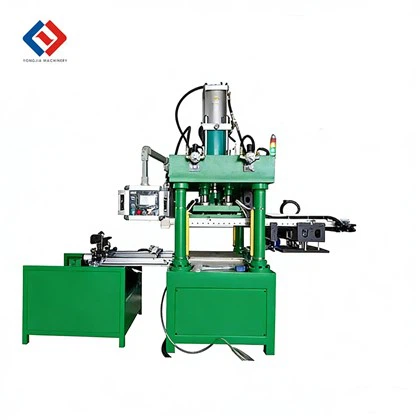
In conclusion, hot pressing machines can indeed be used effectively for automotive materials. Their ability to control temperature and pressure precisely, combined with the numerous benefits they offer, makes them an ideal choice for the automotive industry. Whether it’s thermoplastics, thermosetting plastics, composites, or natural fiber composites, hot pressing machines can process a wide range of materials to create high – quality automotive components.
Head Foot Operated HF Welding Machine If you’re an automotive manufacturer or a supplier looking for a reliable solution for processing your materials, I encourage you to consider our hot pressing machines. Our team of experts is ready to work with you to understand your specific needs and provide a customized solution. Contact us today to start a discussion about how our hot pressing machines can enhance your automotive manufacturing process and help you stay ahead in a competitive market.
References
- Barbero, E. J. (2019). Introduction to Composite Materials Design. CRC Press.
- Incropera, F. P., & DeWitt, D. P. (2002). Fundamentals of Heat and Mass Transfer. John Wiley & Sons.
- MILITKY, J., & TRZCIŃSKA, M. (2016). Natural fibres for technical applications. Woodhead Publishing.
- Schwartz, M. M. (1992). Composite Materials Handbook. McGraw – Hill.
Dongguan Yongjia Machinery Equipment Co., Ltd.
We are one of the most reliable hot pressing machine manufacturers and suppliers in China, specialized in providing high quality customized service. Please feel free to wholesale advanced hot pressing machine at low price from our factory. For quotation, contact us now.
Address: No. 240, Chashan South Road, Chashan Town, Dongguan City, Guangdong Province, China
E-mail: info@yjwelding.com
WebSite: https://www.yjhighfrequencymachine.com/
